
Level 1 sweep and inspection to the NFPA 211 annual standard - flue, crown, cap, and flashing checked and photographed
Chimney sweep logs do not sweep chimneys. They loosen some creosote - which then falls where a brush and vacuum still have to collect it.
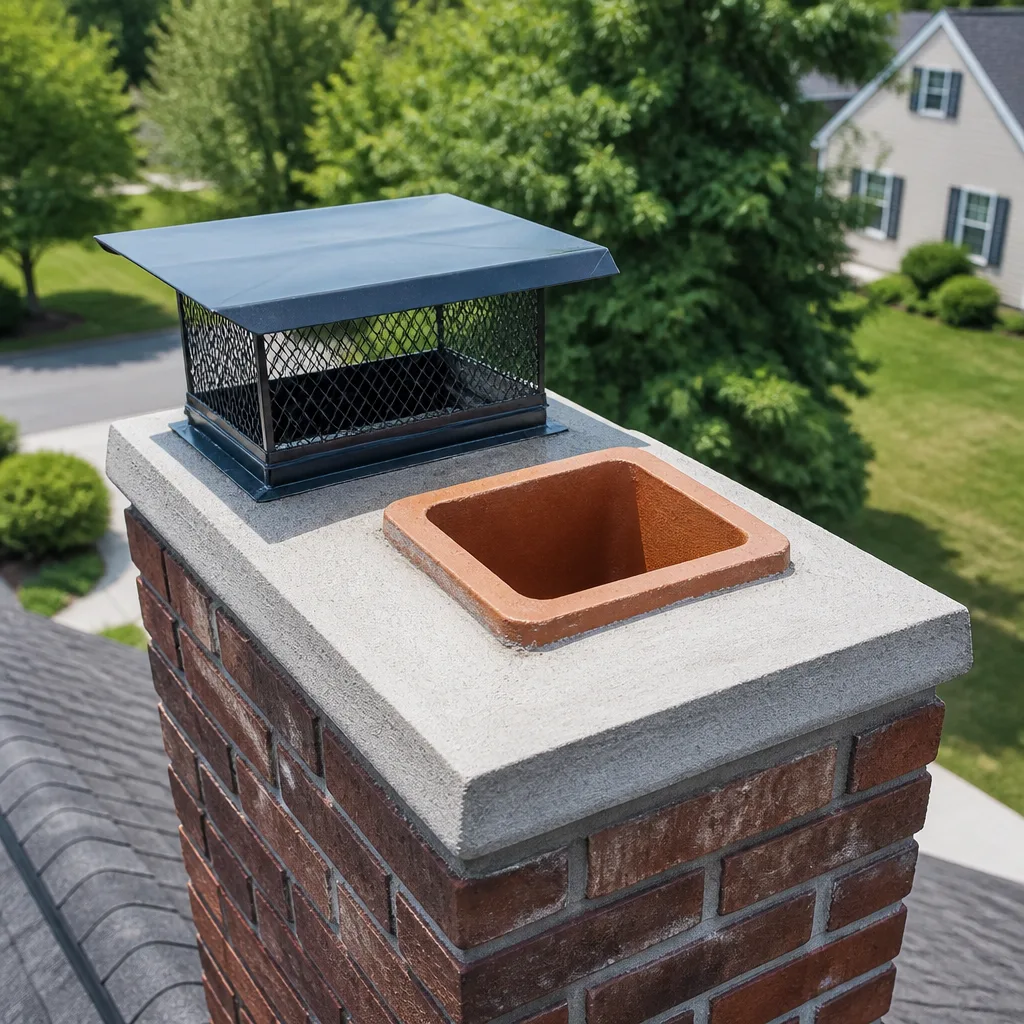
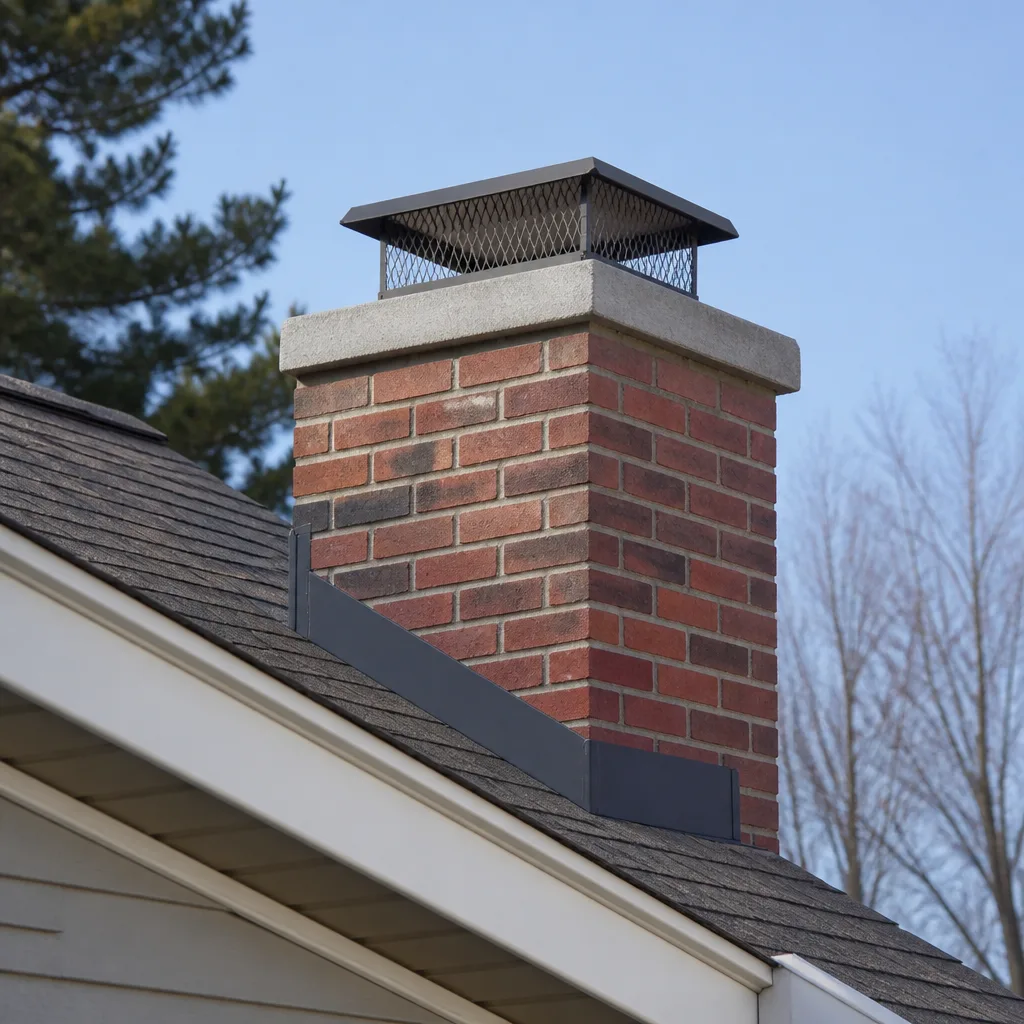
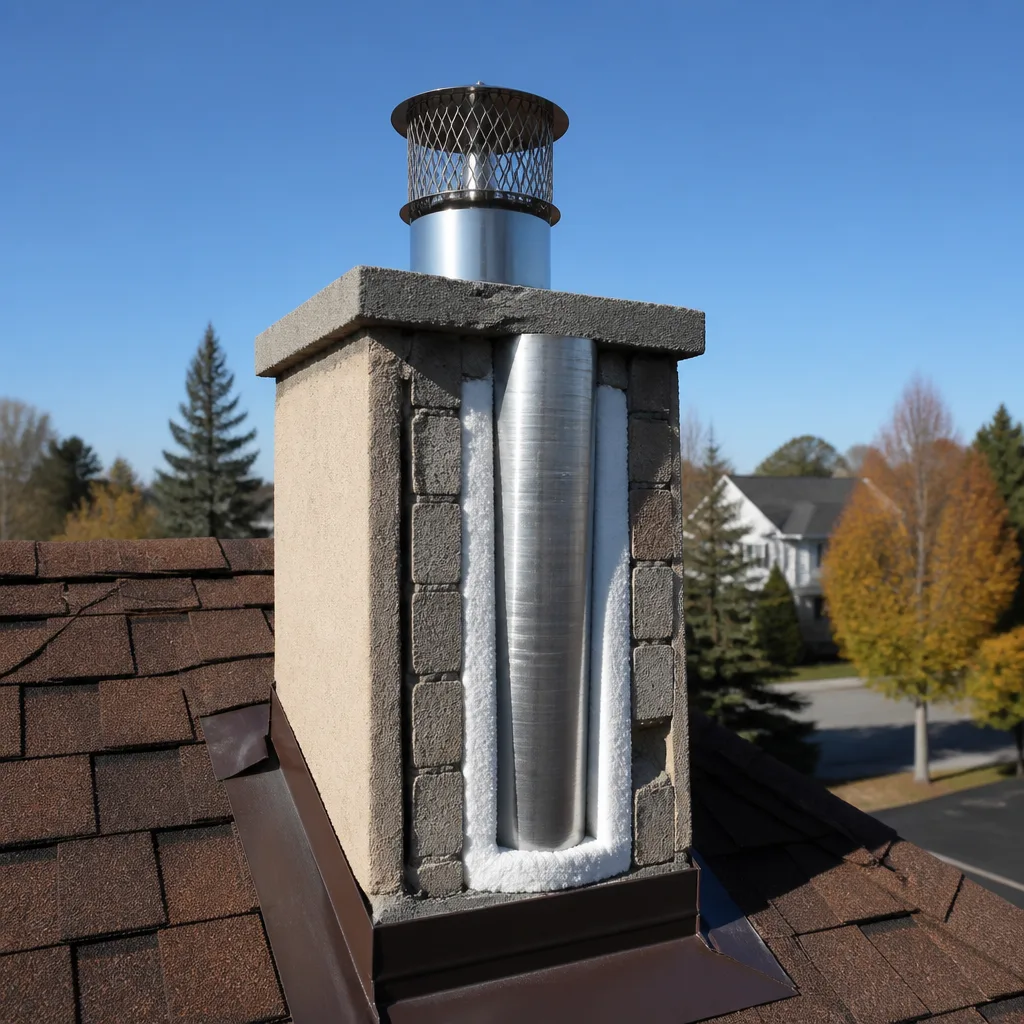
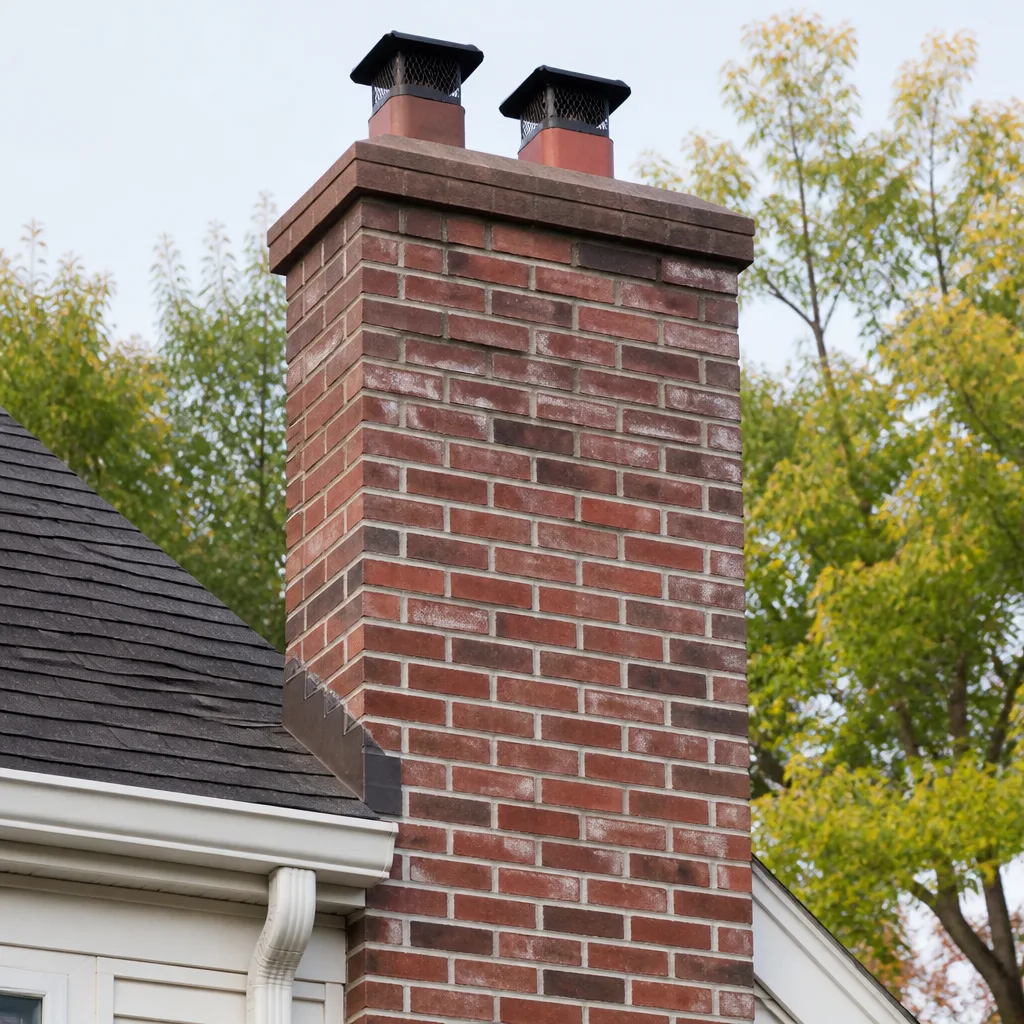
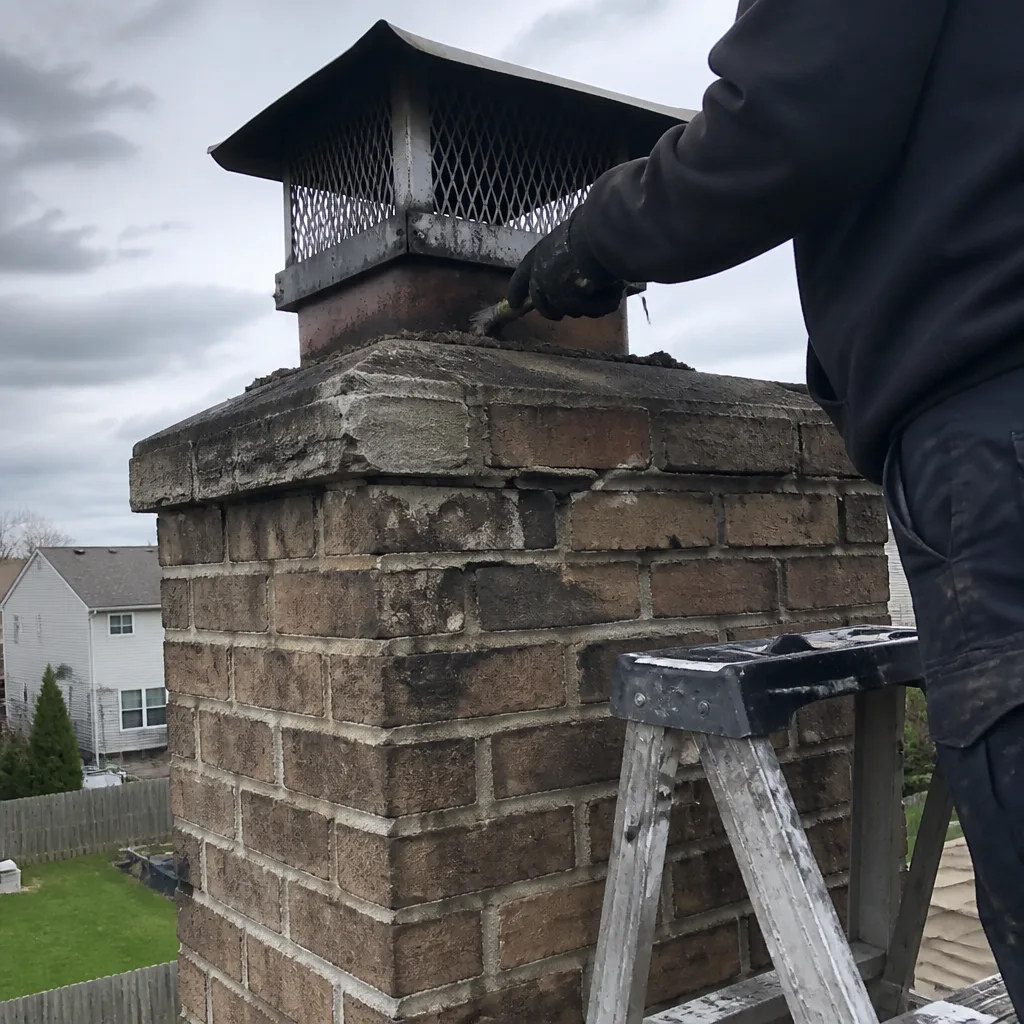 Before
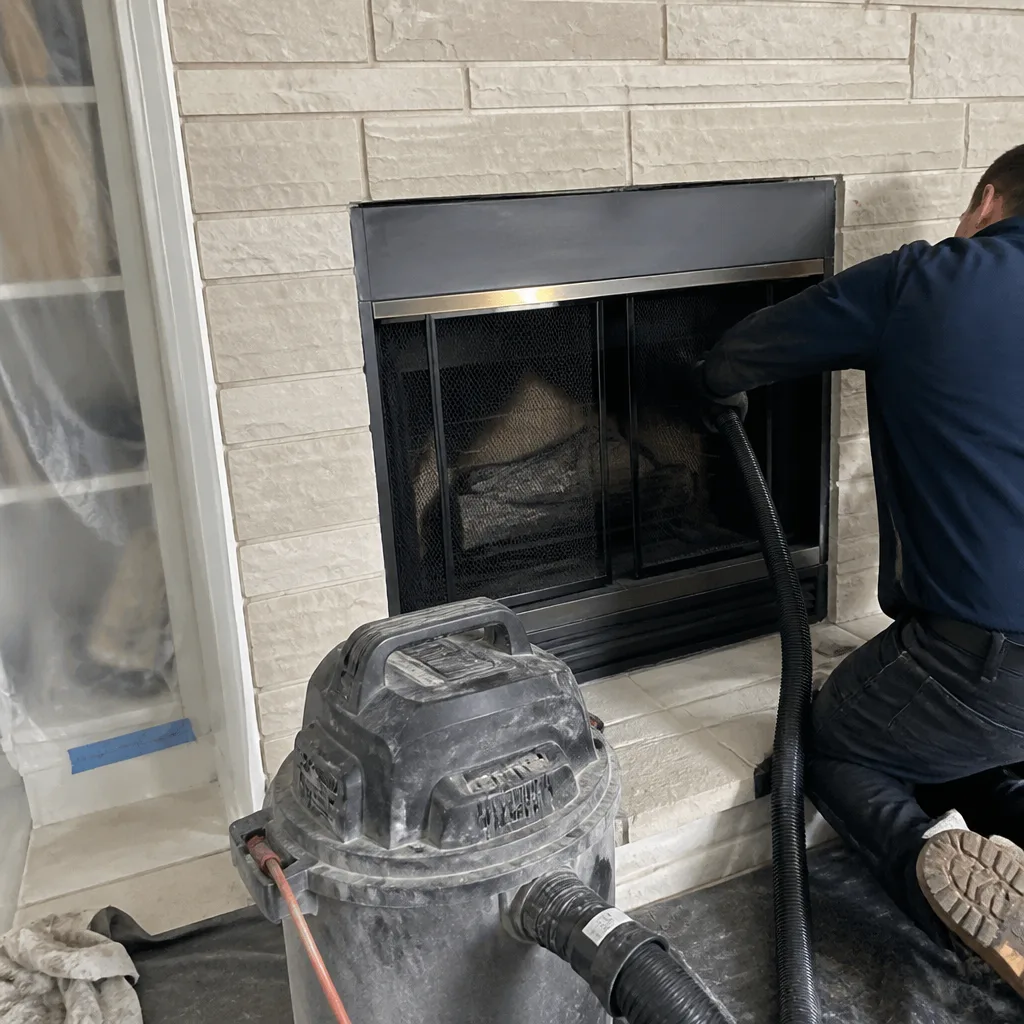 After
After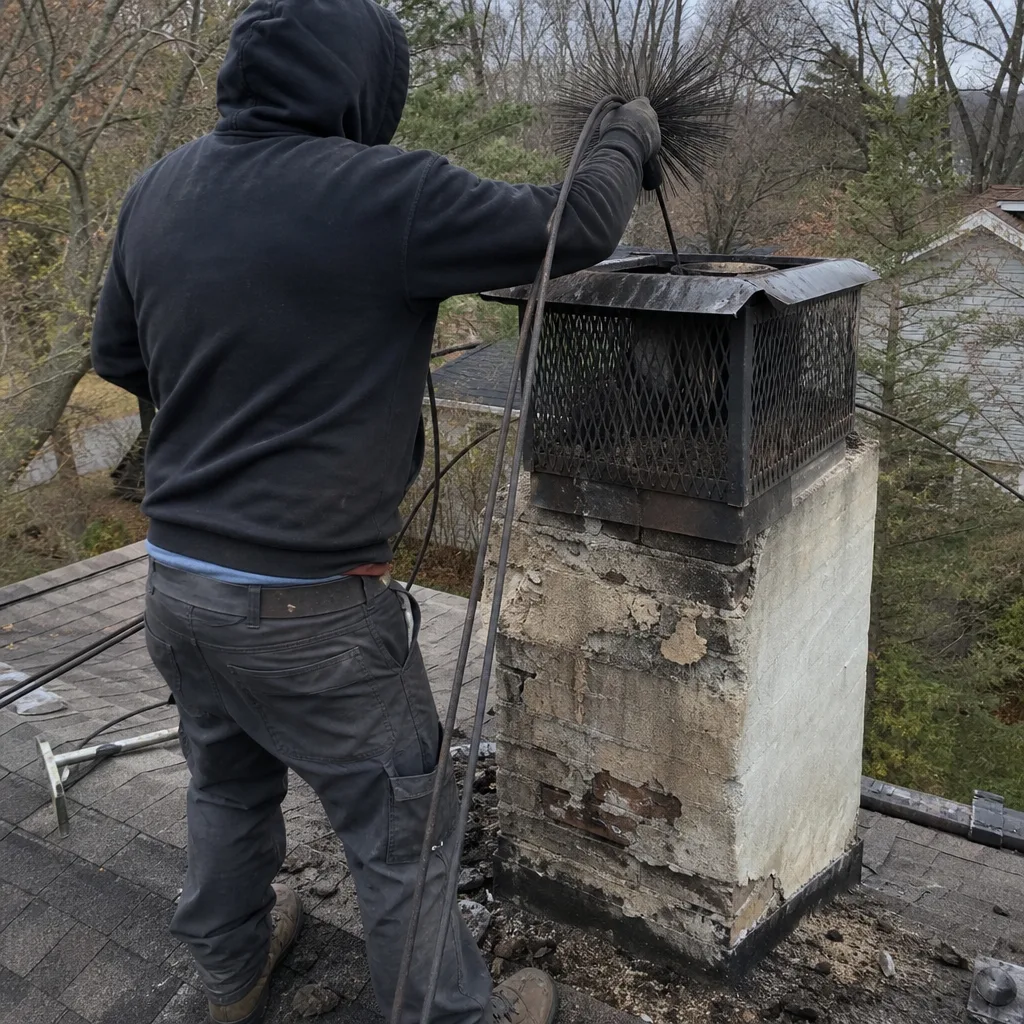 Before
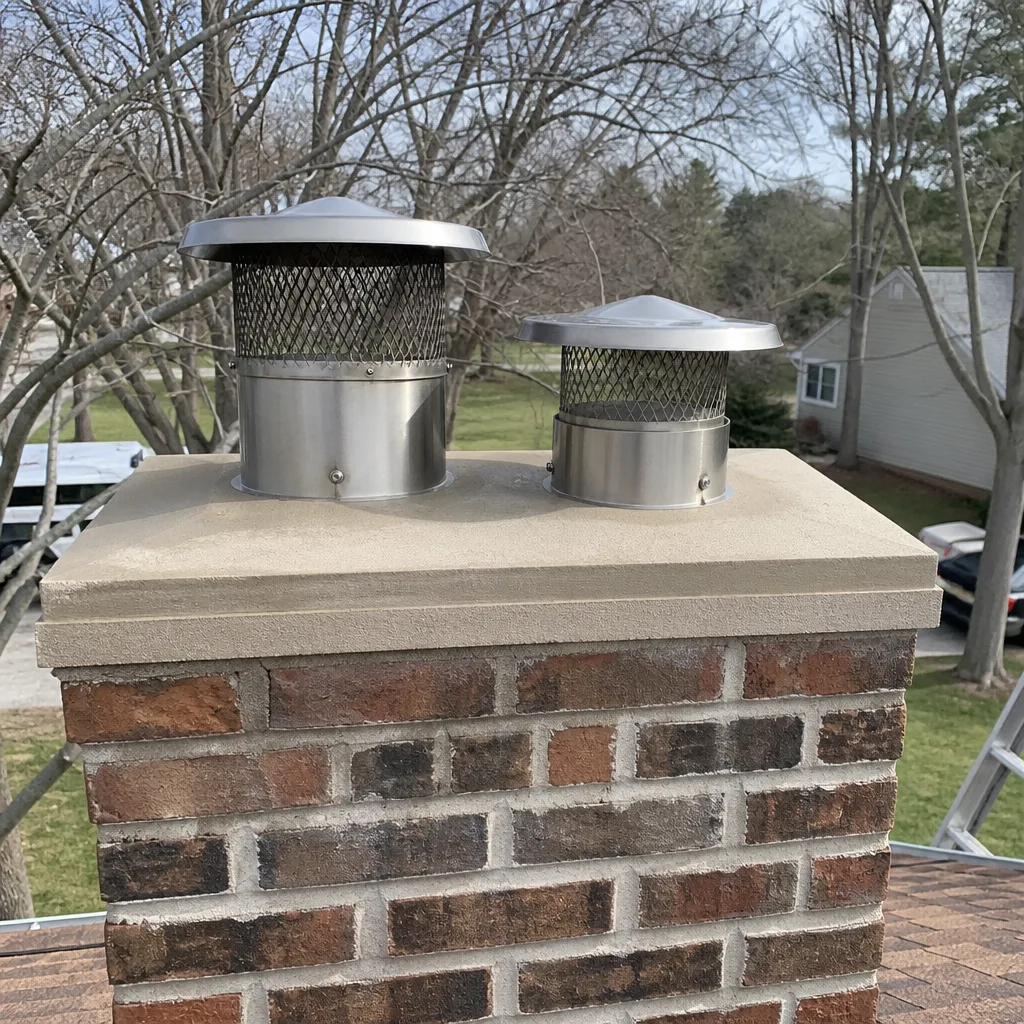 After
After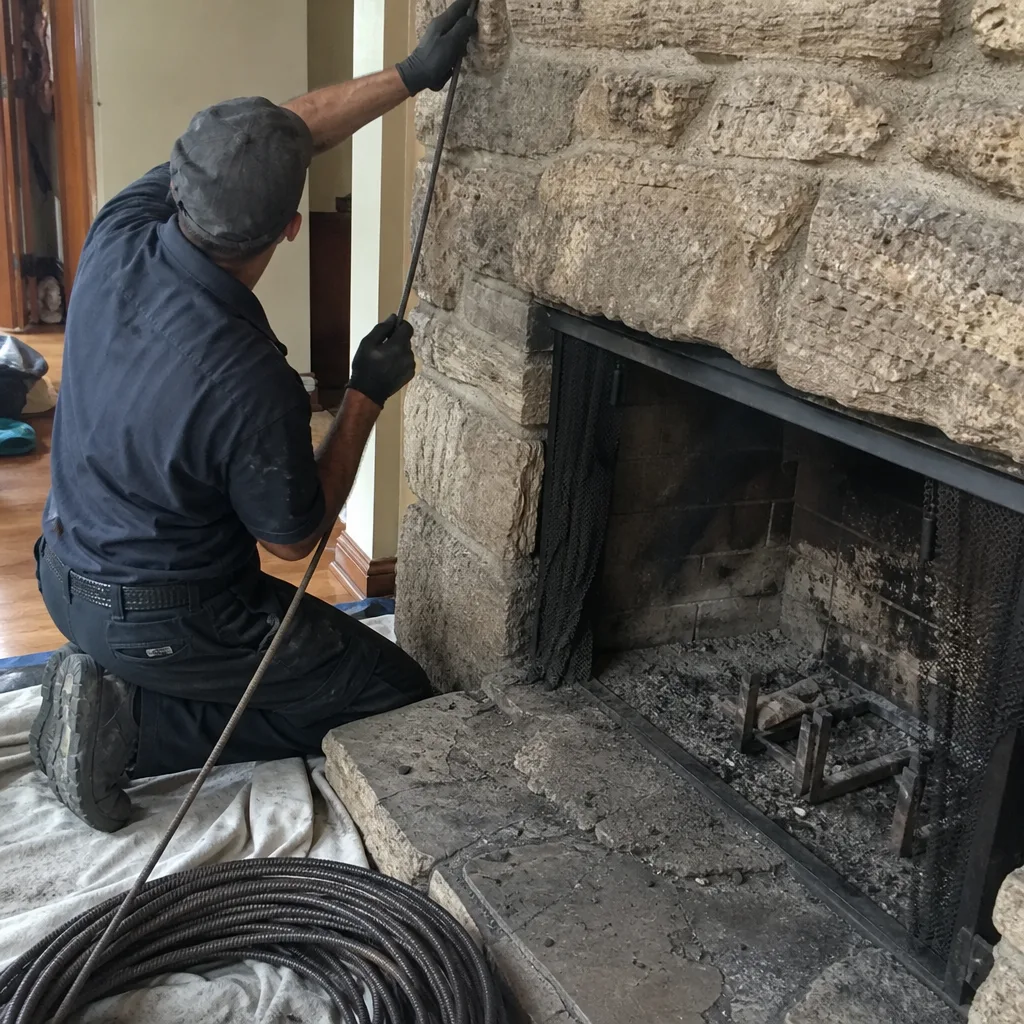 Before
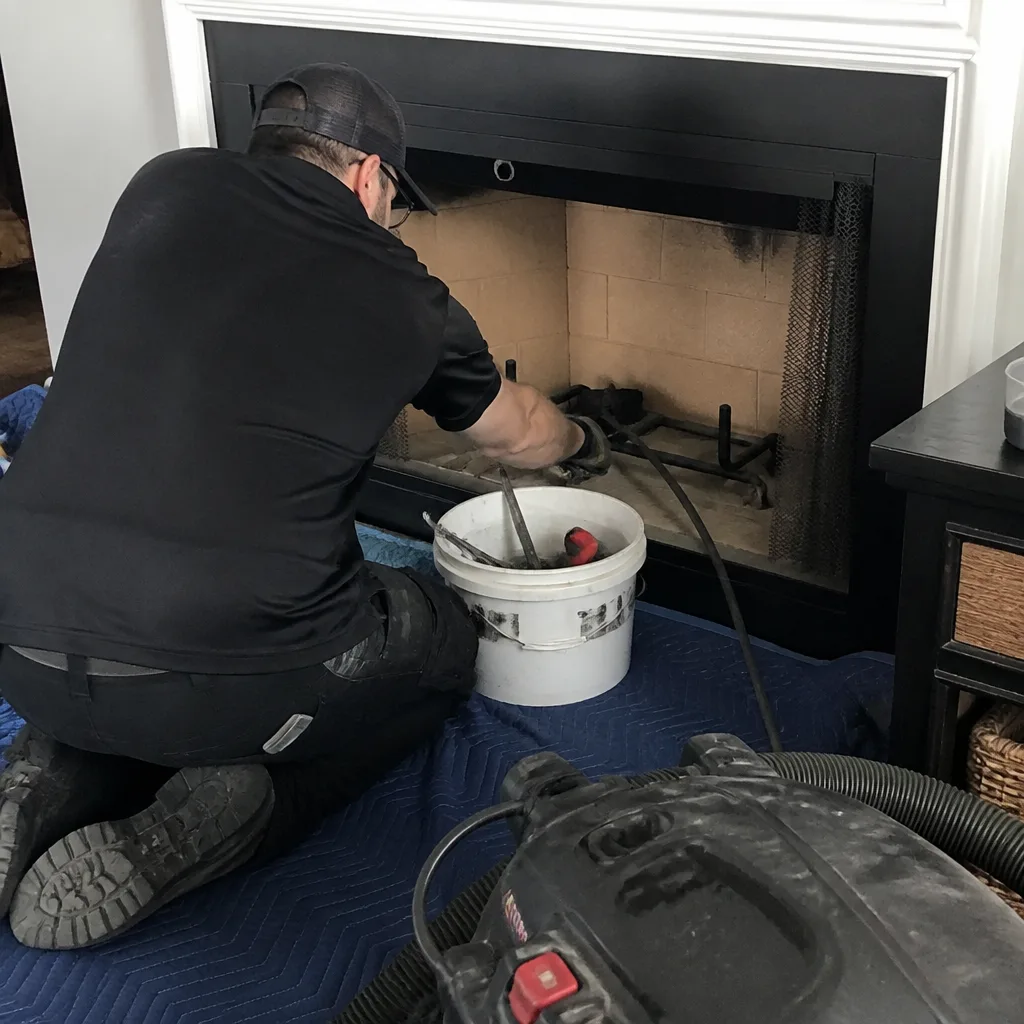 After
AfterSoot Removal in Hoffman Estates, IL
Our Chimney Cleaning & Sweep services in Hoffman Estates typically run between $149 and $349, depending on how much accumulation is present and whether the flue liner, smoke chamber, or firebox face needs attention beyond the basic sweep. Most jobs are completed in a single visit, with a written price delivered before any work begins. If you want to skip straight to scheduling, call Level Two Chimney Hoffman Estates at (331) 200-4445 – a live person picks up every time, around the clock.
Soot is the fine, powdery black or gray residue that forms whenever wood or gas burns incompletely. It collects on the firebox walls, the smoke shelf, the damper plate, the smoke chamber corbeling, and the inner surface of the flue liner. Unlike creosote – the tarry, glazed buildup that forms from cooler, smoldering fires – soot is relatively easy to remove when it’s caught early. The catch is that “early” matters. Left in place through a Hoffman Estates winter, soot absorbs moisture, turns acidic, and starts eating into mortar joints and tile liner sections. What costs $149 to clean in October can cost considerably more to repair by March.
Level Two Chimney Hoffman Estates has been working under the Haven Standard since 2009, and in that time we’ve inspected and cleaned more than 38,000 chimneys across the northwest suburbs. Every soot removal job here starts with a Chimney Cleaning & Sweep in Hoffman Estates assessment – camera down the flue, written scope, written price, written warranty – before a single brush goes into the firebox. That’s not a sales pitch; it’s Clause 1 of the Haven Standard, and it’s the practice we’ve run on every job since the beginning.
When You Need Soot Removal
Not every homeowner knows what soot accumulation looks like from inside the house. Here are the clearest signals that it’s time to call:
- Black staining on the firebox walls or firebrick face. A light gray film after a fire is normal. A heavy black crust that doesn’t brush off with a dry cloth is soot buildup that’s bonding to the masonry – common in Hoffman Estates homes built in the 1970s and 80s with shallower fireboxes that restrict airflow.
- Smoky odor in the room when the fireplace isn’t lit. Soot in the smoke chamber and on the smoke shelf traps moisture from the flue, and that damp-ash smell works its way into the living space. Several homeowners in the Westbury and Brentwood subdivisions have called us specifically for this complaint in late spring, after the chimney sits closed through a wet Illinois April.
- Gray or black smudging around the fireplace opening. When soot builds up on the smoke shelf and damper plate, even a small draft reversal pushes residue forward onto the surround, the mantel, and sometimes the carpet or hardwood directly in front of the hearth.
- It’s been more than 12 months since the last cleaning. NFPA 211 recommends an annual inspection and cleaning for any actively used fireplace. In Hoffman Estates, where heating season runs from roughly October through late April, a single season of regular use is enough to accumulate enough soot to warrant removal before the next season starts.
- You’ve recently switched fuel types or wood species. Transitioning from seasoned oak to pine or softwood – or adding a gas log insert to a previously wood-burning firebox – changes combustion chemistry and often produces more soot, more quickly, than the previous fuel did.
- You’re buying or selling a home in Hoffman Estates. Real estate transactions increasingly require a Level 2 inspection under NFPA 211. If soot accumulation appears on camera footage, buyers’ inspectors will flag it. Getting the cleaning done proactively is cleaner – in every sense – than negotiating a credit after the fact.
Our Soot Removal Process
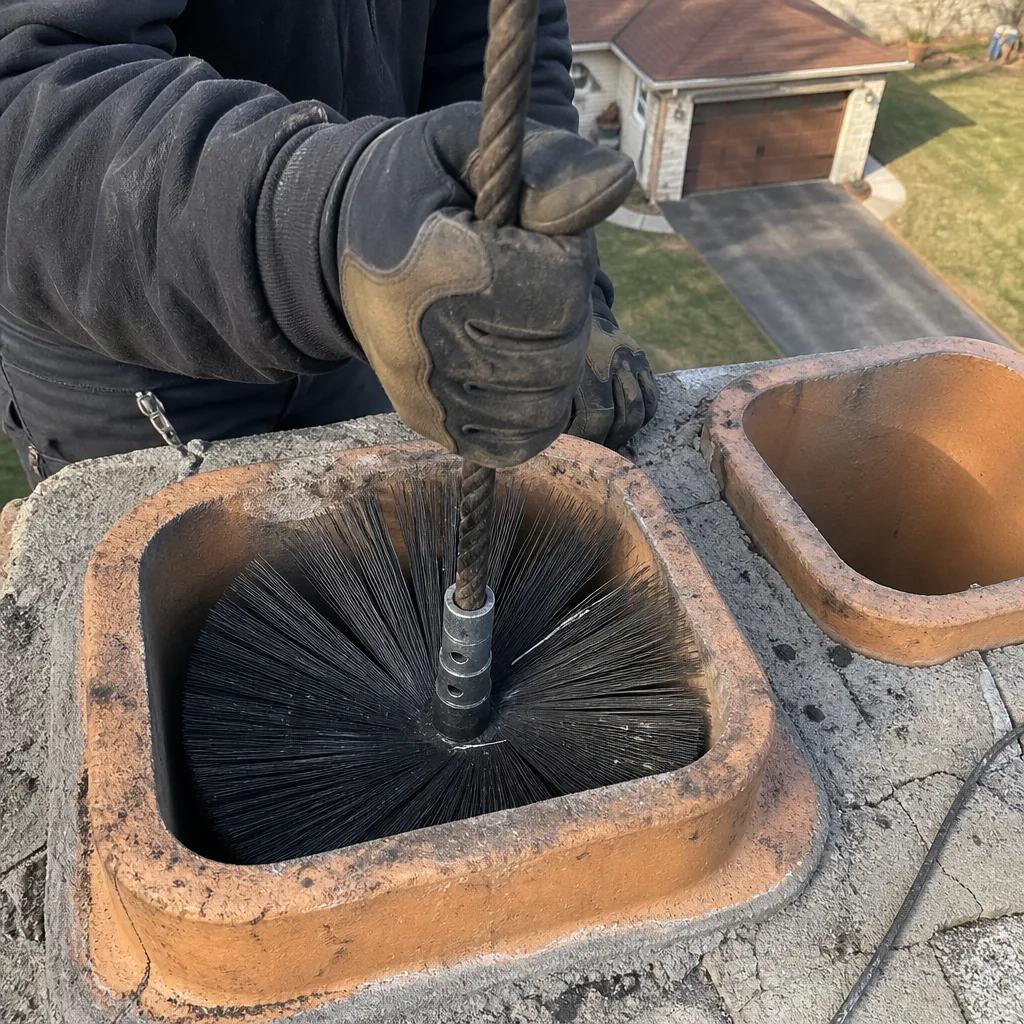
Here’s exactly what happens when a Level Two technician arrives at your door in Hoffman Estates. Nothing is added after the price is agreed; nothing is skipped to save time.
- Camera inspection before cleaning. We run a NFPA 211 Level 2 camera scan down the flue first. This gives us a documented baseline: liner condition, mortar joint integrity, any existing cracks or spalling tile. The photos are yours to keep. Skipping this step and sweeping blind is how problems get missed or inadvertently made worse – we don’t do it that way.
- Written price, scope, and warranty before work begins. Once we know what we’re dealing with, we write it down: exactly what will be cleaned, what tools and materials will be used, the flat price, and the warranty terms. Haven Standard Clause 1. You review it, ask questions, and say yes or no before anything else happens.
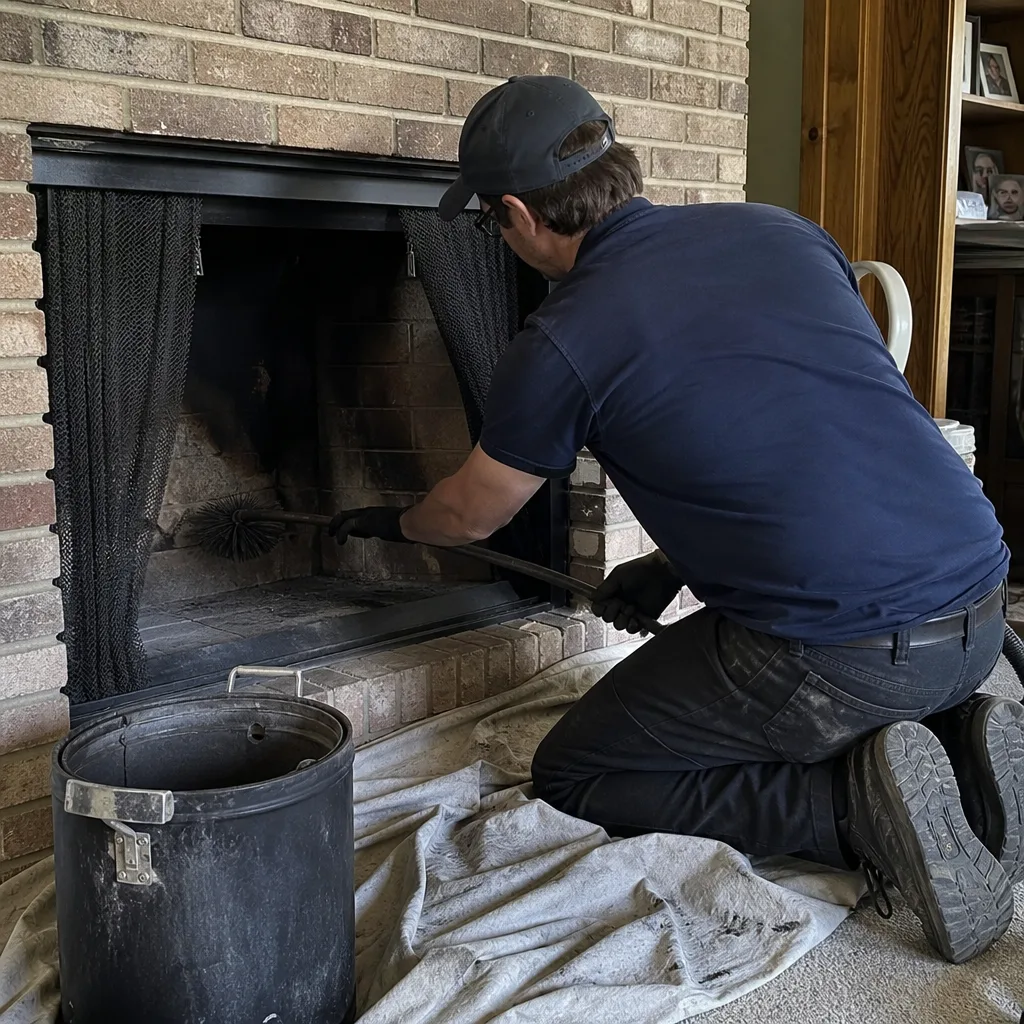
- Drop cloths, HEPA vacuum prep, and containment. Soot is fine enough to travel. Before the first brush enters the flue, drop cloths go down across the hearth and the surrounding floor, and our HEPA-filtered vacuum is connected to the firebox opening to maintain negative pressure. In Hoffman Estates homes with open-plan living areas adjacent to the fireplace, this step keeps the rest of the room clean.
- Systematic brush sweep from top to bottom. We start at the flue cap and work down: flue liner interior, smoke chamber corbeling, smoke shelf, damper assembly, and firebox walls. We use rotary brush systems and hand tools sized to your specific flue dimensions – a square clay tile liner in a 1978 Colonial in Barrington Shores calls for different tooling than a round stainless liner in a 2010 townhome off Golf Road.
- Debris removal and final vacuum pass. All loosened soot and debris is vacuumed from the firebox floor, the smoke shelf, and the damper tray. We don’t sweep it into a bag and leave – the smoke shelf is wiped, the damper plate is checked for free movement, and the glass doors (if present) are cleaned on the firebox side. Olympia Chimney-grade brushes and equipment are part of our standard kit, which matters for liner longevity.
- Post-cleaning camera pass and documented photo record. We run the camera again after cleaning. The before-and-after photos go into your file under Haven Standard Clause 4. You walk away with a documented record of exactly what was found and exactly what was done – not a verbal summary, an actual record. If we found anything during the process that wasn’t visible on the first pass – a cracked tile section, deteriorated mortar at the smoke chamber – we note it in writing with photos and explain what it means and what it would cost to address.
 Before
 After
AfterSoot Removal Pricing in Hoffman Estates
How Much Does Chimney Cleaning & Sweep Cost? (2026 Price Guide) - Hoffman Estates, IL: soot removal runs between $149 and $349 for most residential fireplaces, with the camera inspection and documented photo record included. Here’s what moves the number in either direction:
| Scope | Typical Price Range |
|---|---|
| Standard firebox and flue sweep (light to moderate soot, single-story flue) | $149 – $219 |
| Firebox, flue, and smoke chamber cleaning (heavier accumulation or two-story flue height) | $219 – $299 |
| Full system cleaning including smoke shelf scrub-out, damper service, and extended flue (over 25 feet) | $299 – $349 |
| Add: smoke chamber resurfacing if corbeling mortar is deteriorated (HeatShield or equivalent) | Quoted separately in writing |
A few things that affect where your job lands on that range:
- Flue height and configuration. A two-story flue on an older two-chimney home off Higgins Road is more work than a single-story prefab flue in a newer townhome near the Barrington Road corridor.
- Soot depth and bonding. Light, powdery soot sweeps easily. If soot has been left in place long enough to mix with moisture and start bonding to the tile, it takes more passes and more time.
- Smoke chamber condition. Hoffman Estates has a significant stock of homes built in the 1970s and early 80s with rough-corbeled smoke chambers – that irregular masonry surface traps soot more than a parged chamber does, and it takes longer to clean properly.
- Access and liner type. A deteriorating clay tile liner that needs careful tooling to avoid widening existing cracks is handled differently than an intact, smooth stainless liner.
Every price we quote is written down before work starts – no surprises when the job is done. If you have a written estimate from another company, bring it to us. We offer a free second opinion on any written quote, and we’ll tell you exactly what we see, in writing, whether or not you hire us. Call (331) 200-4445 for a free estimate – the price will be on paper before any work begins.
What Makes Soot Dangerous If It’s Left Alone
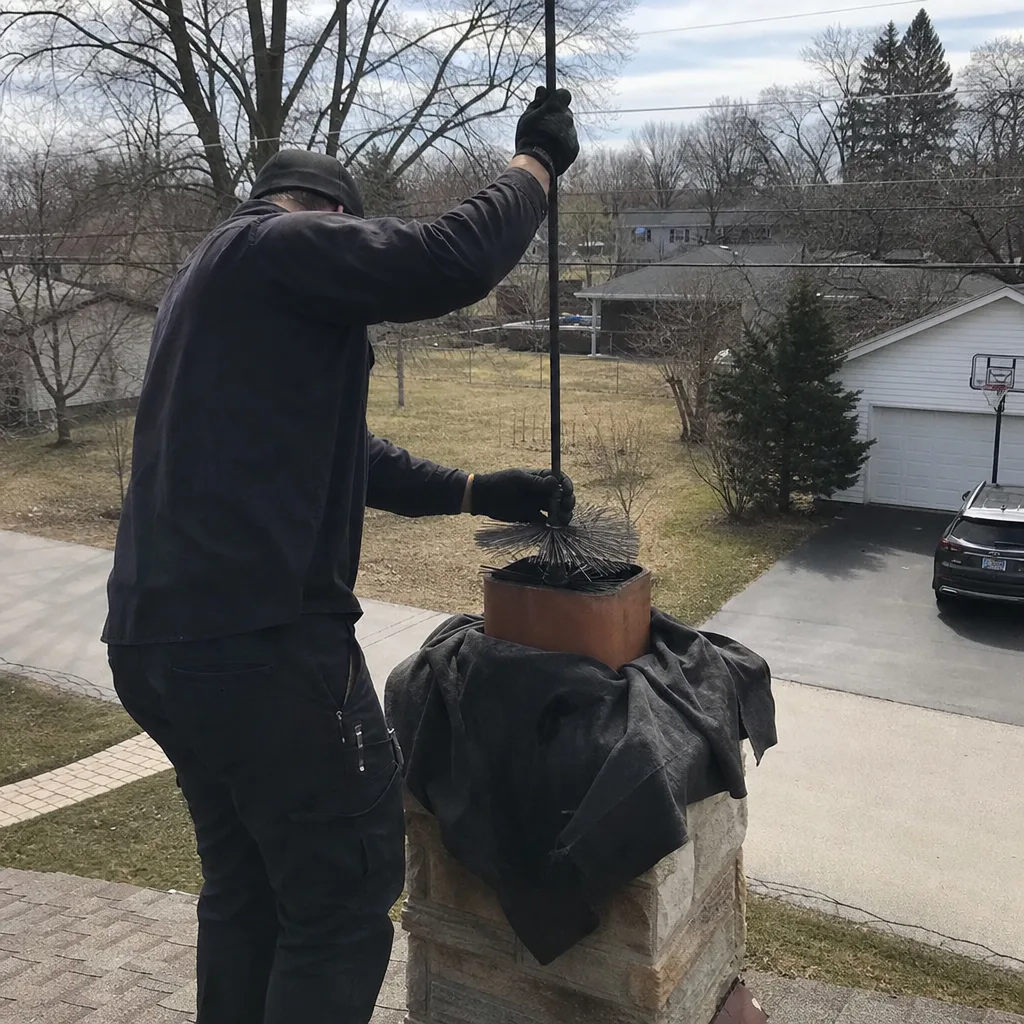
Soot in its early, dry form is more of a maintenance issue than a structural one. But when it progresses, the consequences get expensive fast – and in a couple of scenarios, genuinely hazardous.
The main concern is acidic corrosion. Soot contains carbon compounds that, when wet, form weak carbonic and acetic acids. Over the course of a Hoffman Estates winter – where the flue goes through repeated freeze-thaw cycles – that mild acidity accelerates the breakdown of mortar joints between tile liner sections. A liner that camera footage shows intact in November can have visible joint separation by March if soot and moisture have been working on it all season.
The secondary concern is combustion risk. Soot itself is not creosote, and it doesn’t carry the same ignition risk as Class II or Class III creosote deposits. But soot doesn’t stay soot indefinitely. In a flue that runs chronically cold – a short, oversized flue or one that serves a fireplace used only occasionally – soot can condense into a sticky proto-creosote layer that’s the first step toward a more hazardous buildup. The camera pass at the start of every Level Two visit is specifically designed to catch that transition before it becomes a fire risk.
We also see, regularly in the Schaumburg Township area, situations where previous owners installed gas log sets into existing wood-burning fireboxes without adjusting the damper or having the flue checked. Gas combustion produces soot with a different chemical composition than wood soot, and it tends to accumulate at the damper plate and lower flue faster. If you’re in that situation and you’re not sure when the flue was last cleaned, that’s worth a camera look before the next fire.
Soot Removal and the Rest of Your Chimney System
Soot removal doesn’t happen in isolation from the rest of the chimney. When we’re cleaning the flue and firebox, we’re also looking at the chimney cap (whether it’s intact and keeping rain and animals out), the crown (the concrete or mortar cap at the very top – spalling crowns let water in, and water plus soot accelerates liner deterioration), and the exterior masonry above the roofline.
This matters specifically for Hoffman Estates homes because the village sits in a frost zone where the ground freezes reliably every winter. Water that gets into a cracked crown or under a damaged cap freezes, expands, and widens any existing mortar joint gaps – including the ones holding your flue tile sections together. Finding that on camera in October costs a fraction of what a full liner replacement costs in spring.
Our full home page outlines the complete range of services, including chimney cap and crown work, liner installation, and firebox repair. Any of those that turn up on camera during a soot removal job get documented in writing with photos, and a separate written quote before any conversation about additional work happens.
FAQs – Soot Removal in Hoffman Estates
How much does soot removal cost in Hoffman Estates?
Soot removal in Hoffman Estates runs $149 to $349 for most residential jobs, with the camera inspection and documented photo record included in that price. The lower end covers a standard single-story flue with light accumulation; the higher end covers a two-story or extended flue with heavier soot, a full smoke chamber cleaning, or added smoke shelf work. Every price is written down before we start. Call (331) 200-4445 and we’ll give you an exact written number based on your specific setup – the estimate is free.
Is soot the same as creosote, and does it matter?
Soot and creosote are related but different. Soot is the dry, powdery carbon residue from incomplete combustion – it cleans up relatively easily. Creosote is what soot becomes when it condenses on cooler flue surfaces: first a flaky, brittle layer (Class I), then a porous, tar-like coating (Class II), and eventually a hard, glaze-like deposit (Class III) that’s highly flammable and much harder to remove. The distinction matters because Class III creosote requires chemical treatment and specialized tools, not just brushing, and carries a measurably higher chimney fire risk. Our camera scan at the start of every job identifies exactly which category you’re dealing with, in documented photographs, so you know what you’re working with before any work begins.
How long does a soot removal appointment take?
Most soot removal jobs in Hoffman Estates take between 60 and 90 minutes from setup to final camera pass. A simple firebox-and-flue sweep runs closer to 60 minutes. A two-story flue with a full smoke chamber cleaning and detailed smoke shelf scrub-out can run to 90 or occasionally 120 minutes. We don’t rush the camera pass at the end – that documentation is the point of the visit, and shortcutting it would mean you leave without a complete record of the work.
Can I just clean soot myself instead of hiring a sweep?
The firebox face and the visible lower firebox wall are areas where a homeowner with a stiff brush, a HEPA shop vac, and the right drop cloths can do some surface cleaning without creating a hazard. The smoke shelf, smoke chamber, damper assembly, and flue liner are a different matter. Working in the smoke chamber puts you in contact with materials that have been accumulating at high temperatures, and accessing the upper flue without the right equipment and a camera verification of what you’re dealing with creates real risk of missing a developing creosote layer or a cracked liner section. We’ll always tell you what’s genuinely safe to handle yourself and what needs a trained technician – that’s part of what the written scope is for.
Schedule Your Soot Removal in Hoffman Estates
If your fireplace has been through a season of use, if you’ve noticed an odor or staining, or if it’s simply been longer than 12 months since an Annual Sweep, soot removal is a straightforward job with a written price on the page and a camera-documented record when it’s done. Level Two Chimney Hoffman Estates has been running under the Haven Standard since 2009, with more than 38,000 inspections and cleanings behind us. Every job gets a written price before work starts, a background-checked uniformed technician, and a 365-Day Done Right Promise – if it’s not right, we make it right.
Call (331) 200-4445 to schedule a free estimate. A live person picks up every time, 24 hours a day. The written price will be in your hands before any work begins.
Written by Corrine Halstead, Owner at Level Two Chimney Hoffman Estates, serving Hoffman Estates.