
Last updated September 22, 2026
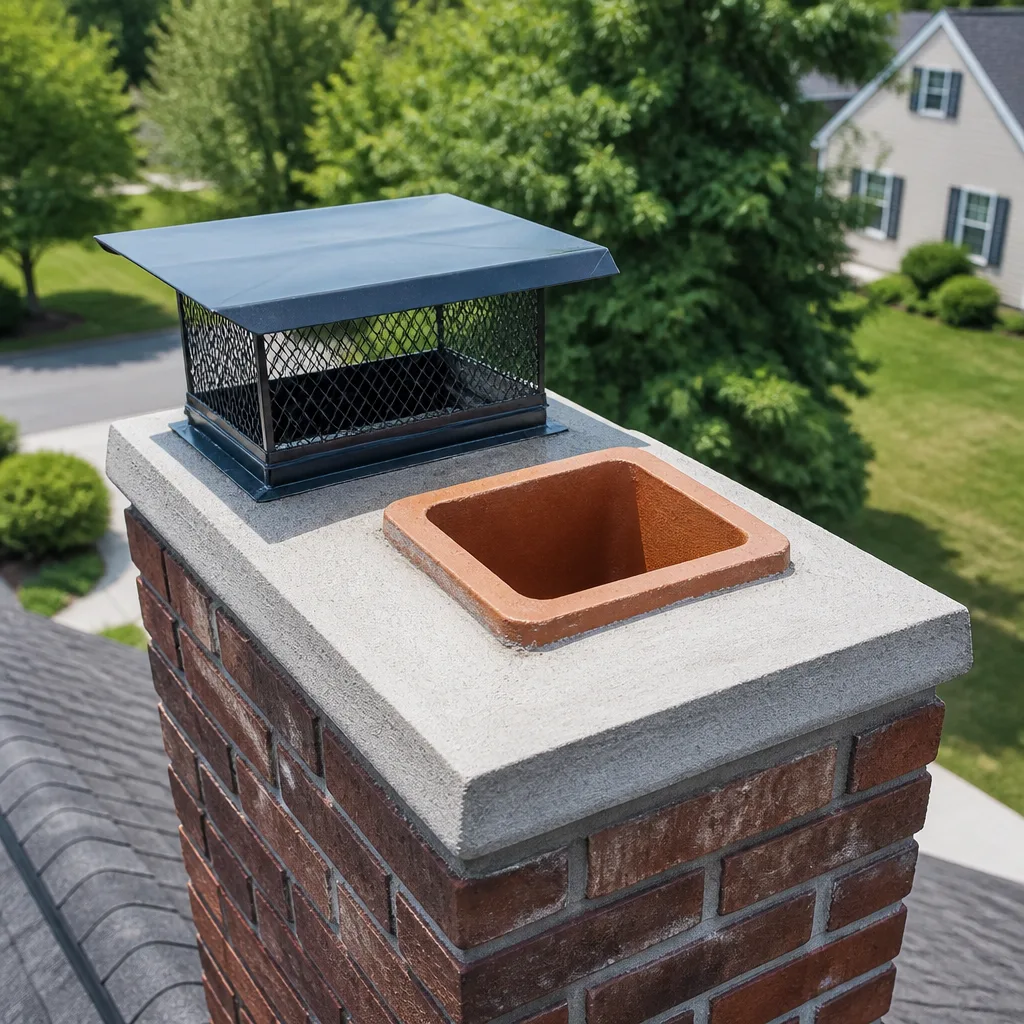
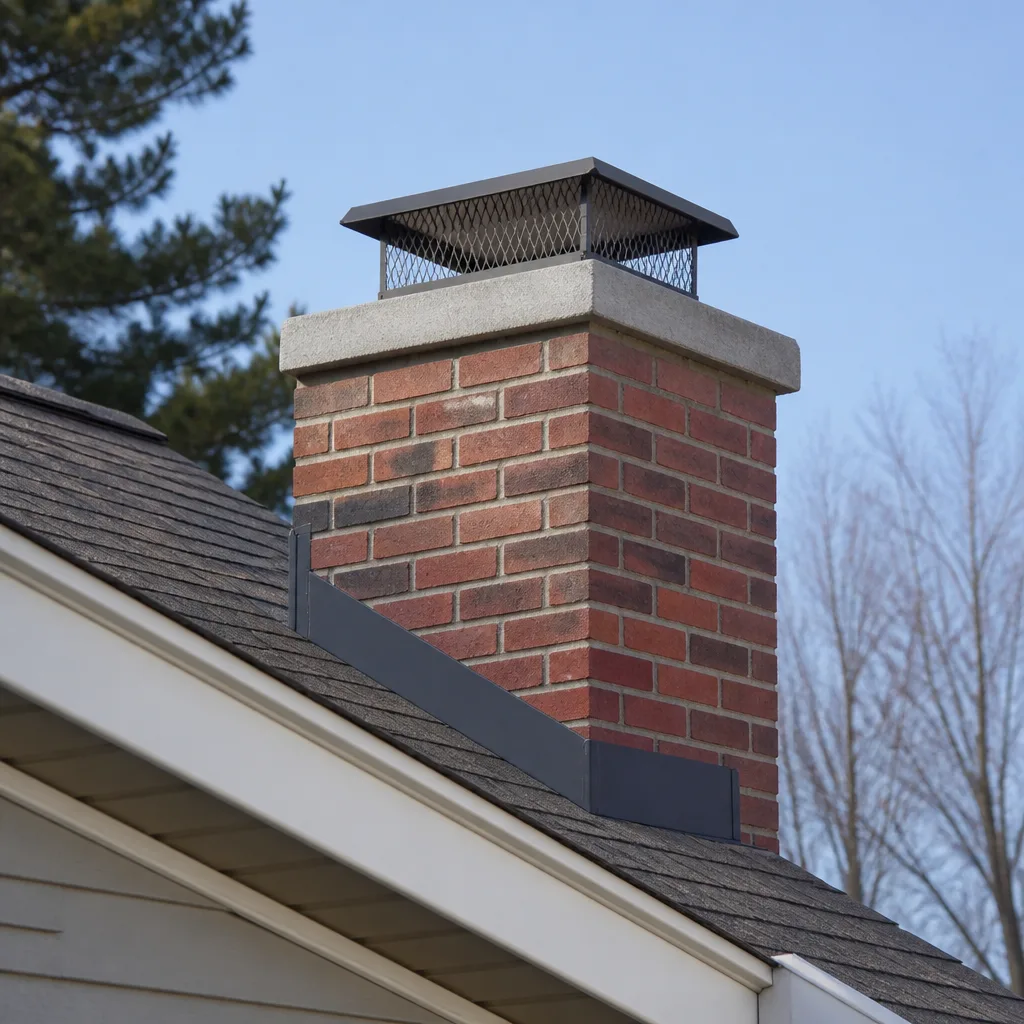
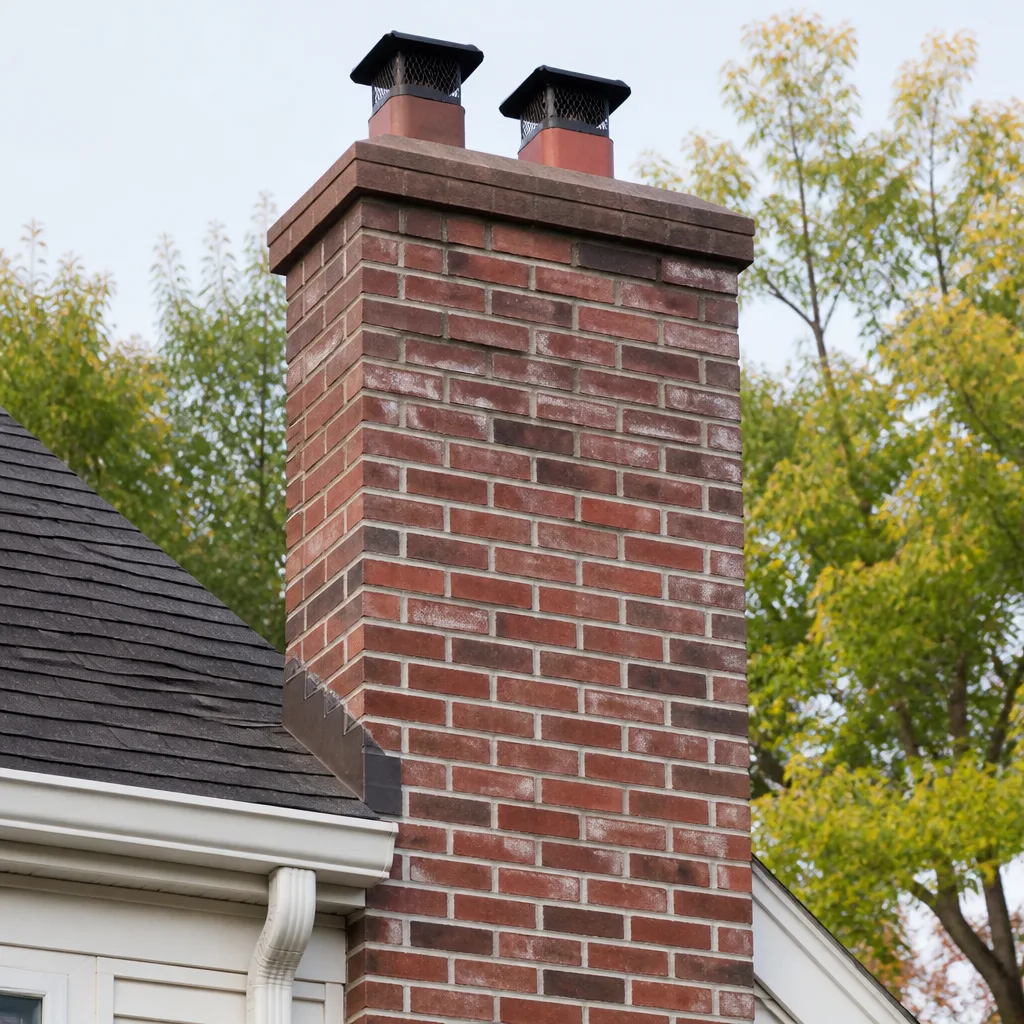
Level 1 sweep and inspection to the NFPA 211 annual standard - flue, crown, cap, and flashing checked and photographed
Chimney sweep logs do not sweep chimneys. They loosen some creosote - which then falls where a brush and vacuum still have to collect it.
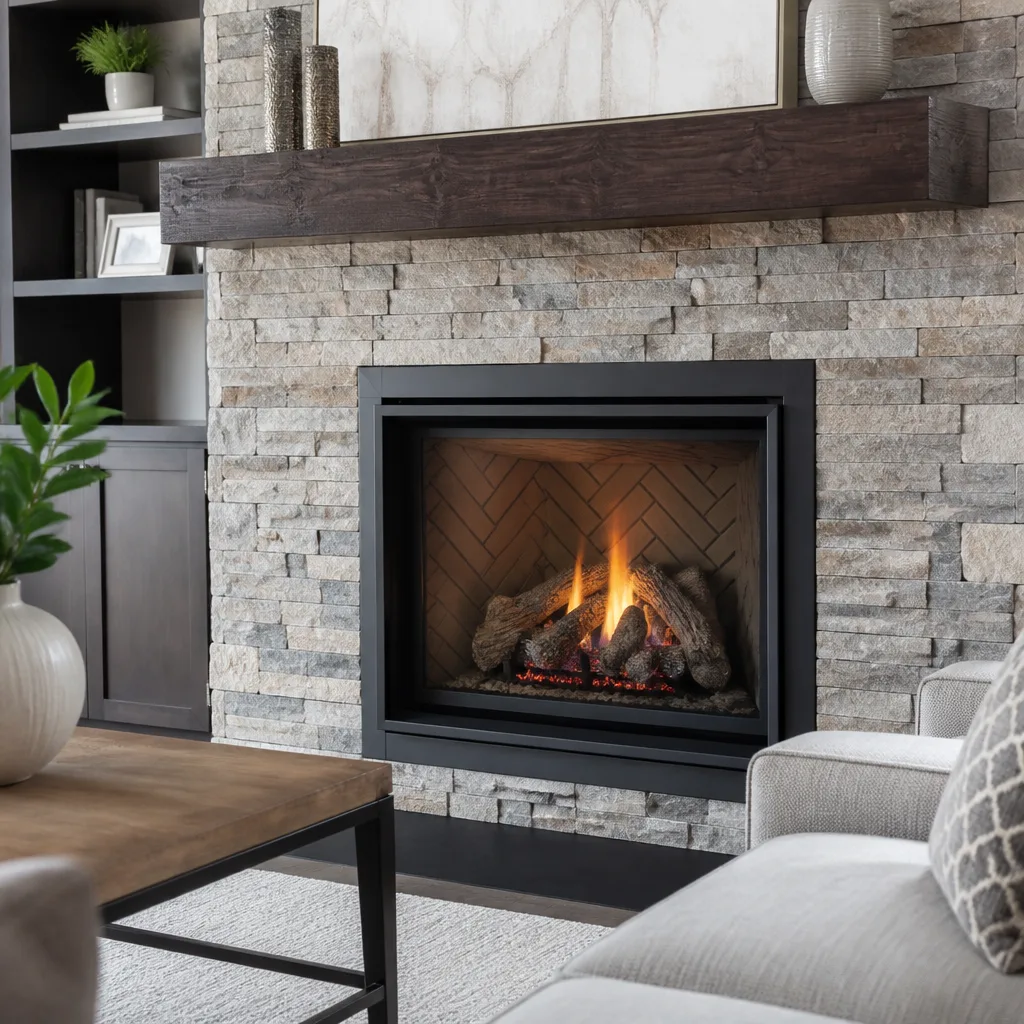
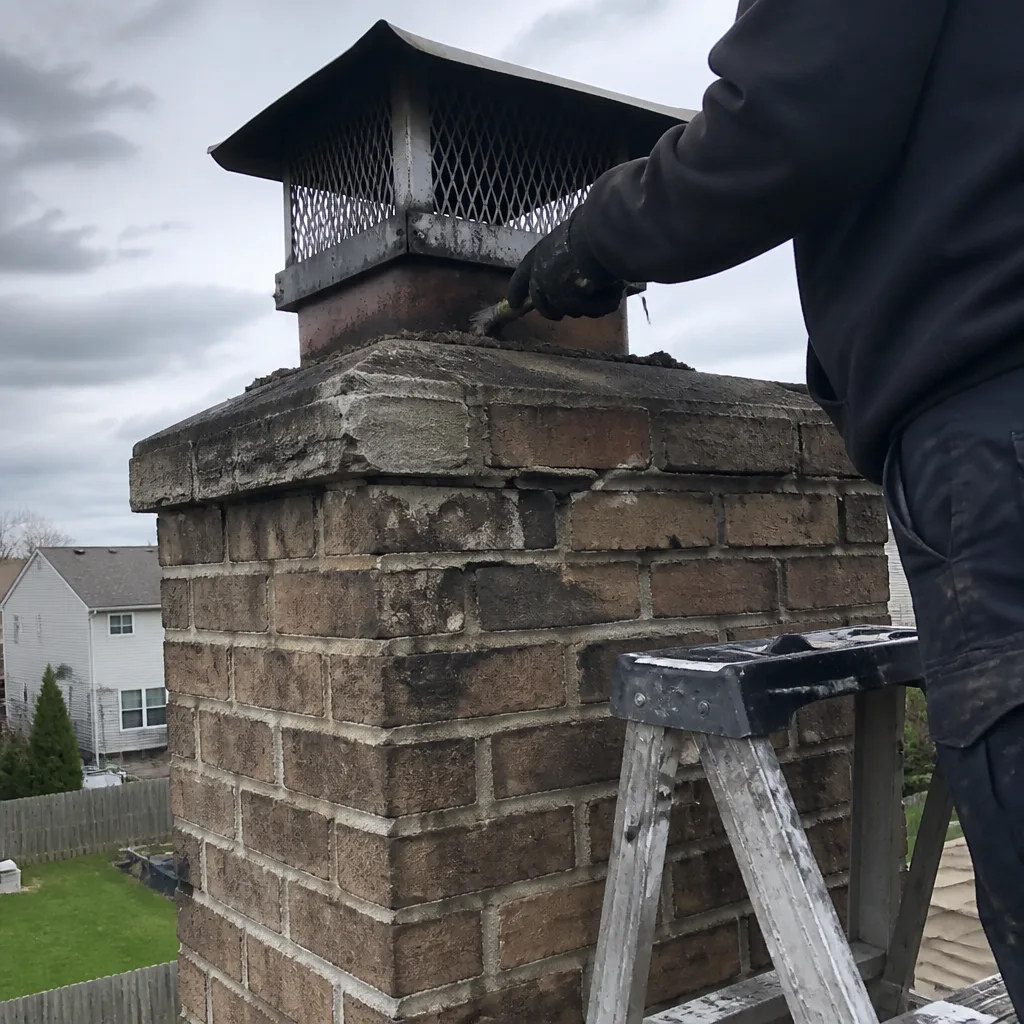 Before
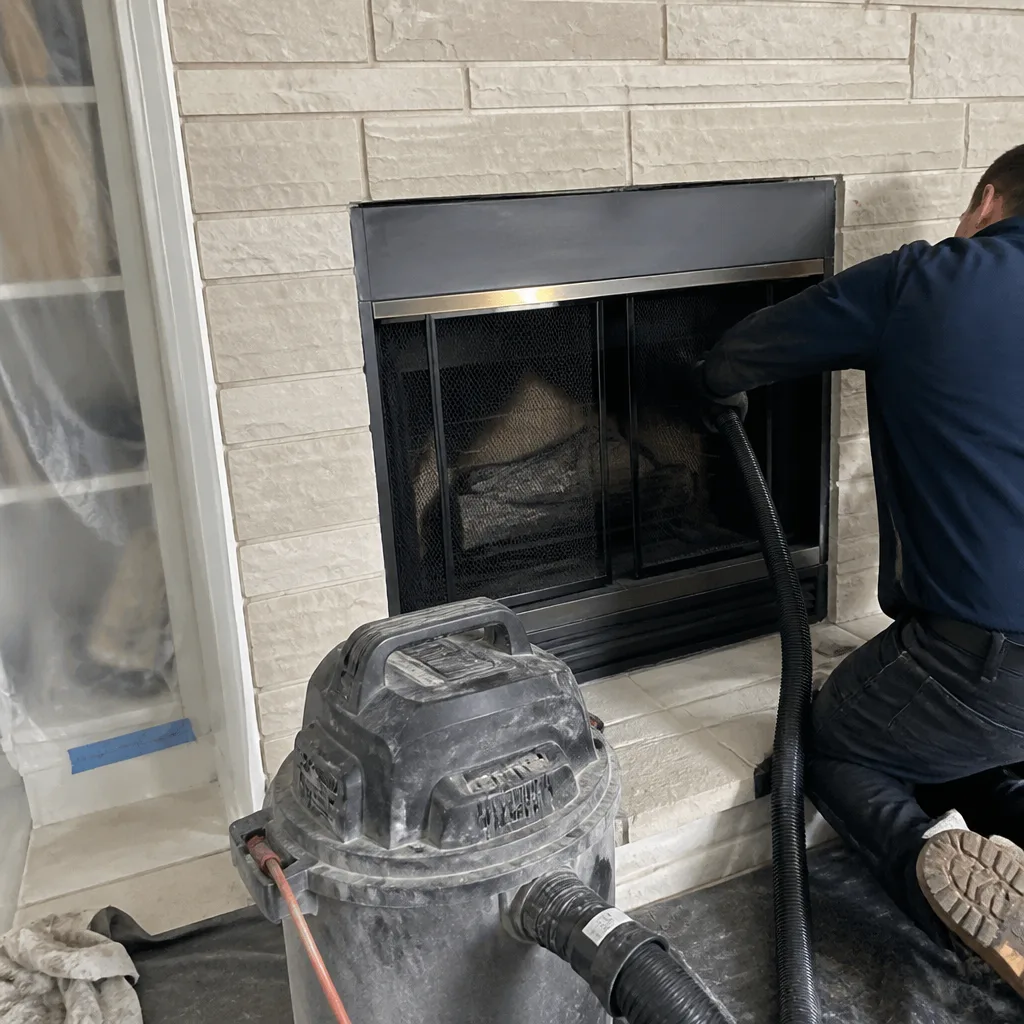 After
After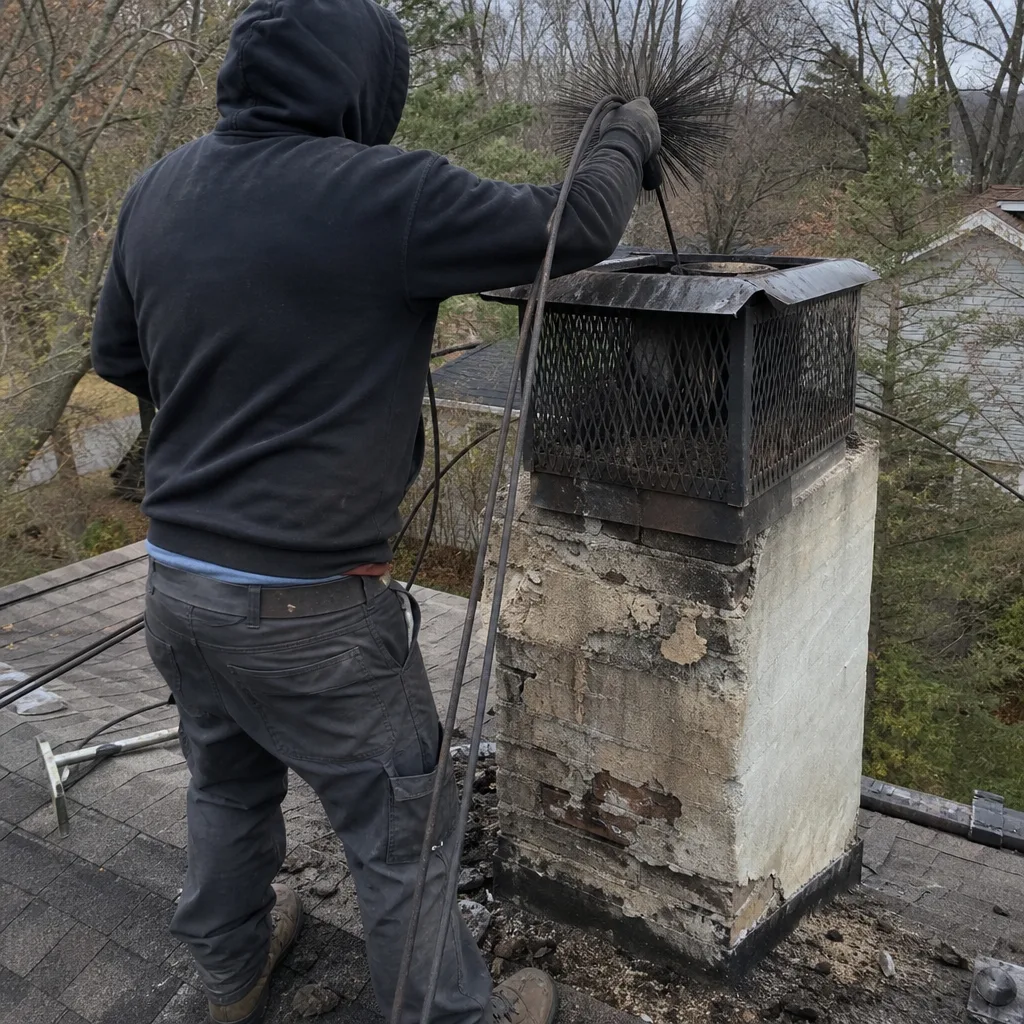 Before
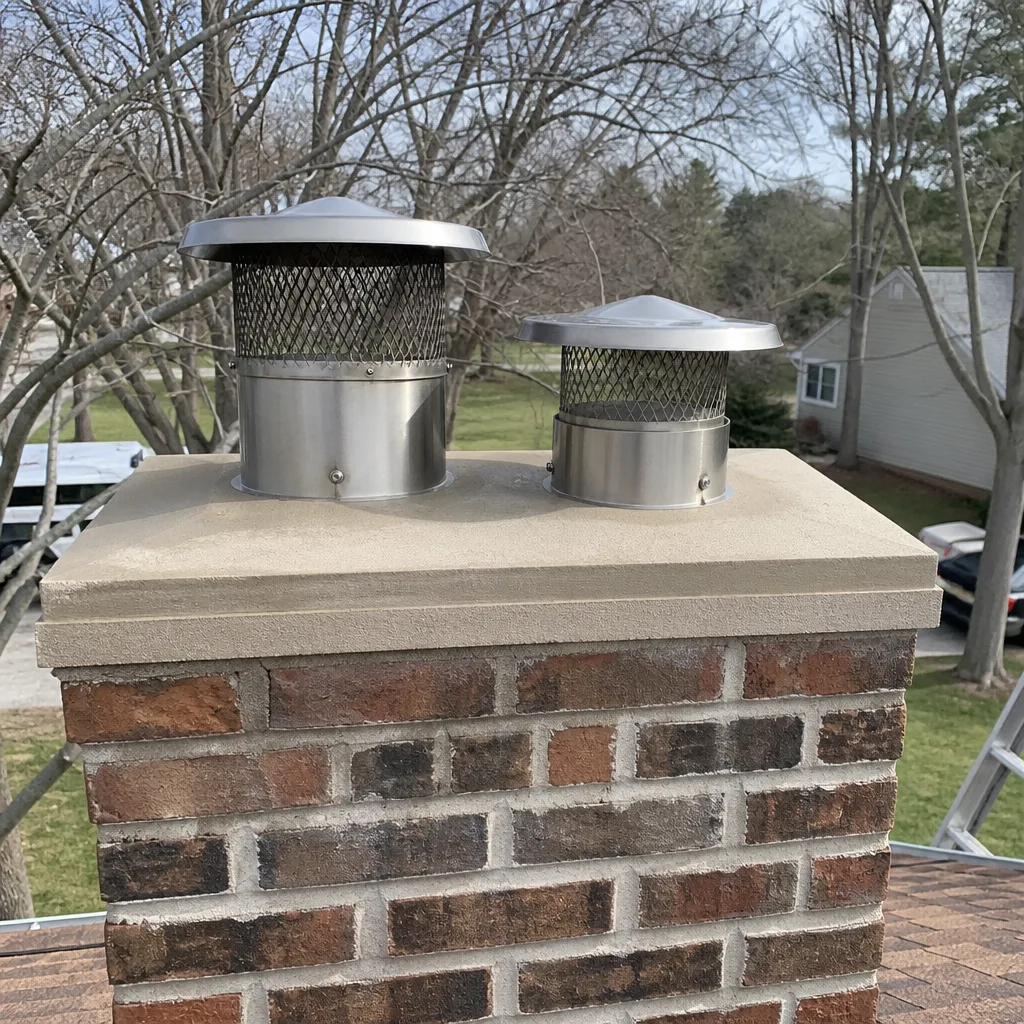 After
After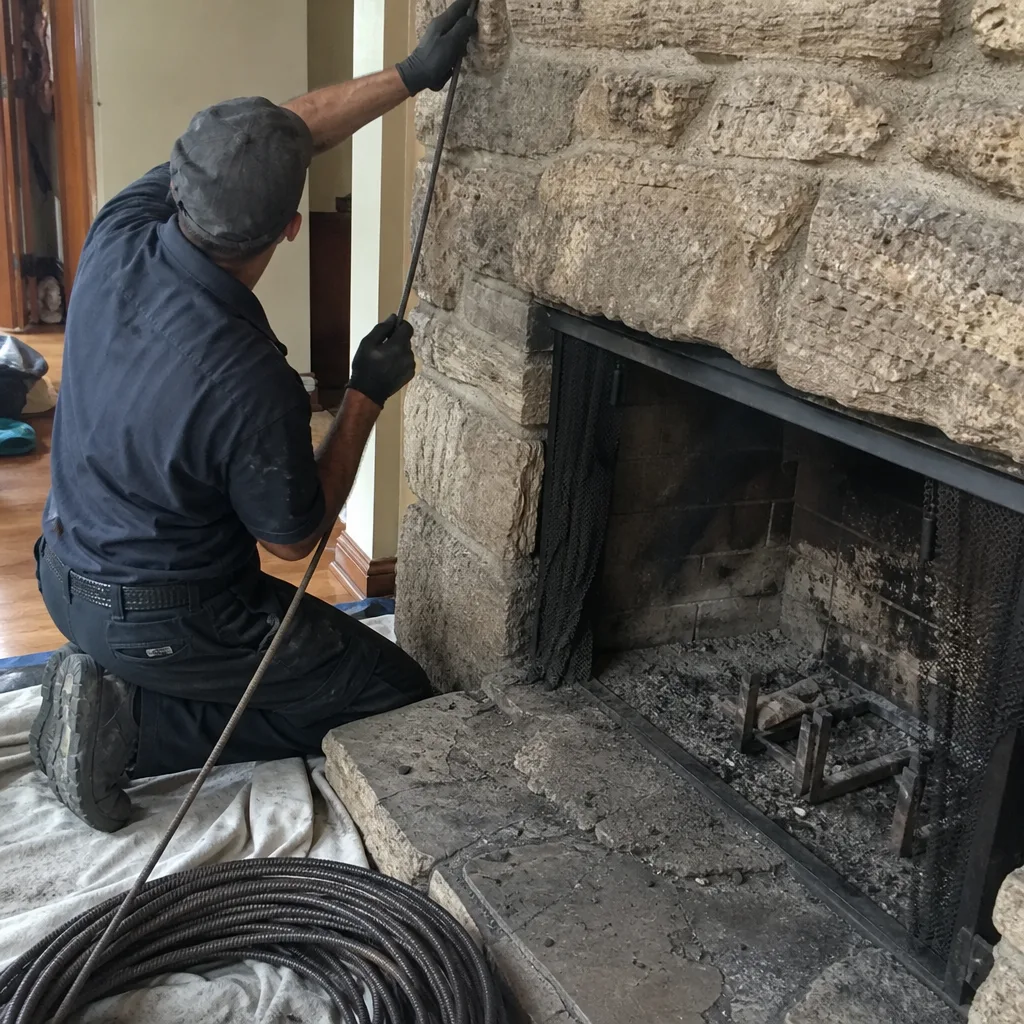 Before
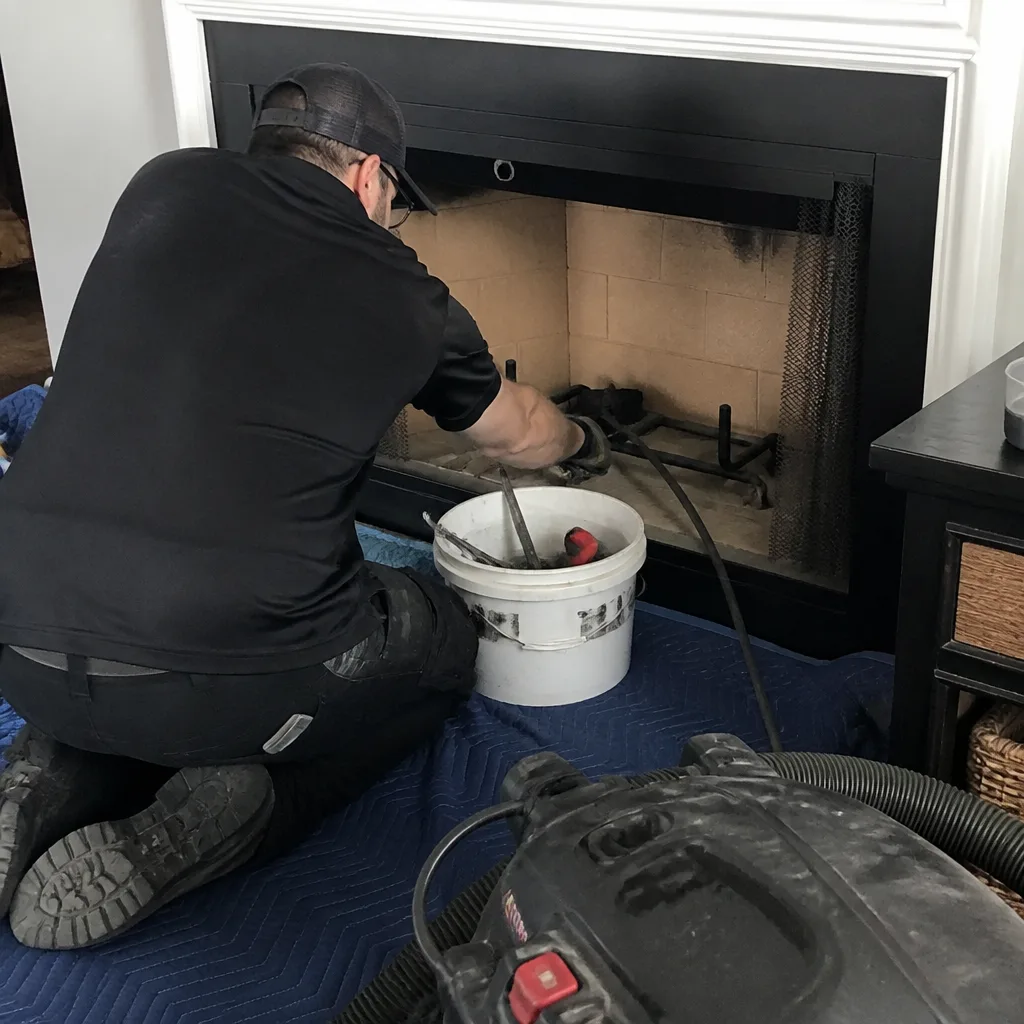 After
AfterSeasonal Chimney Cleaning Care for Hoffman Estates: Year-Round Homeowner’s Guide
Most chimney companies recommend a single annual cleaning “before the burn season.” But in Hoffman Estates, the post-season inspection in April is the more diagnostically valuable appointment. That’s when a full winter’s creosote load, freeze-thaw mortar damage, and liner stress from sustained firing are all visible at once. Hoffman Estates sits in USDA Hardiness Zone 5b with a heating season that runs roughly 180 days, and the chimney work that matters in October is categorically different from the work that matters in April. This guide assigns specific tasks and inspection triggers to each season based on local climate conditions, so you’re not guessing when to call or what to ask for.
Quick Answer
Chimney cleaning in Hoffman Estates should follow a two-appointment rhythm: a post-season Level 2 camera inspection in April-May to assess winter damage and creosote accumulation, and a pre-season cleaning and functional check in September to clear debris and verify safe operation before the first fire. Mid-season monitoring from November through March catches draft problems and odor changes that indicate immediate attention is needed.
Table of Contents
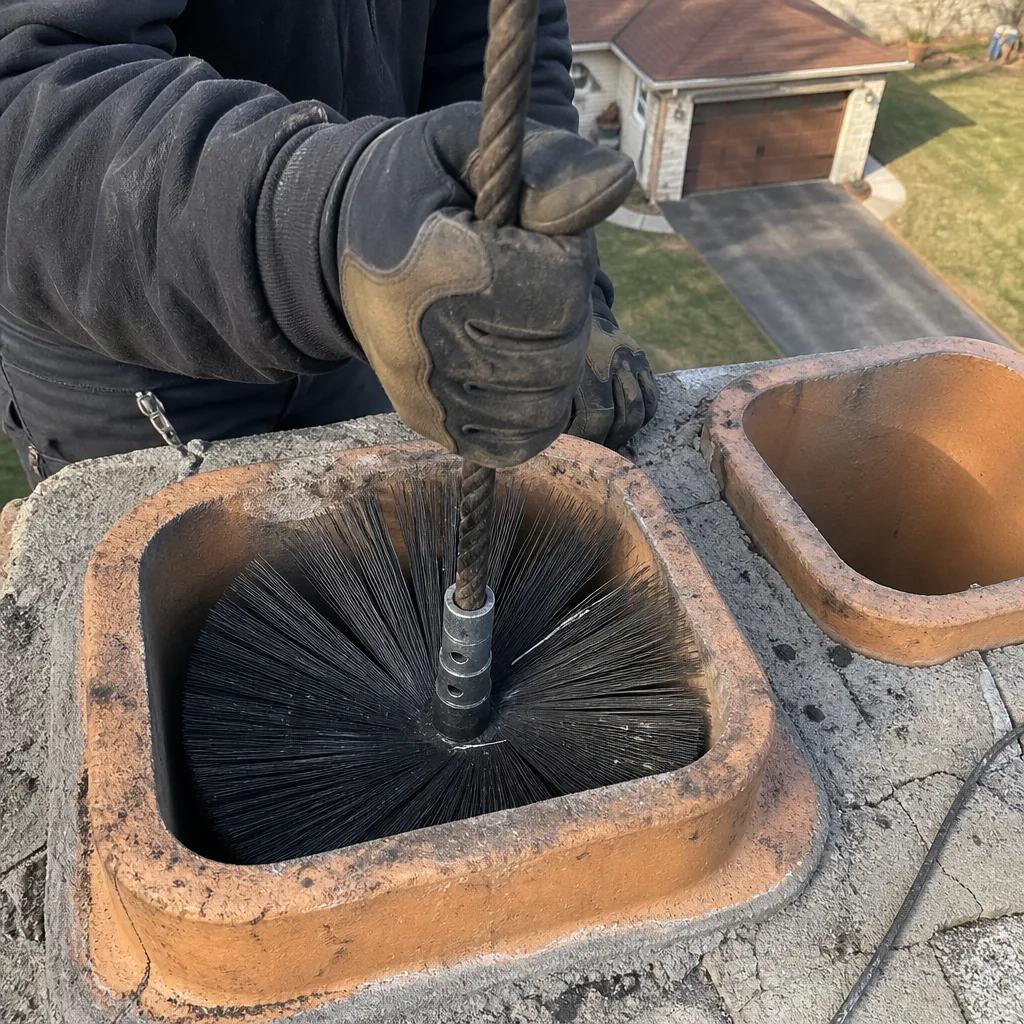
- April-May: The Post-Season Inspection That Reveals Everything
- June-August: The Off-Season Window for Repairs and Upgrades
- September: The Pre-Season Cleaning and “Ready to Fire” Protocol
- November-March: Mid-Season Monitoring and When to Call
- How Hoffman Estates’s Tree Canopy Affects Your Chimney Calendar
- What Seasonal Chimney Maintenance Costs in Hoffman Estates
- What Documentation You Should Receive After Every Visit
 Before
 After
AfterApril-May: The Post-Season Inspection That Reveals Everything
The April appointment is the one we push hardest for Hoffman Estates homeowners to keep. After 180 days of heating, the flue liner has cycled through hundreds of thermal expansions and contractions. The freeze-thaw cycles of a Zone 5b winter have done their work on mortar joints and crown integrity. And the full season’s creosote accumulation is present and classifiable, not partially burned off by a late-season fire.
Here’s what a post-season NFPA 211 Level 2 inspection with camera documentation actually finds in Hoffman Estates homes:
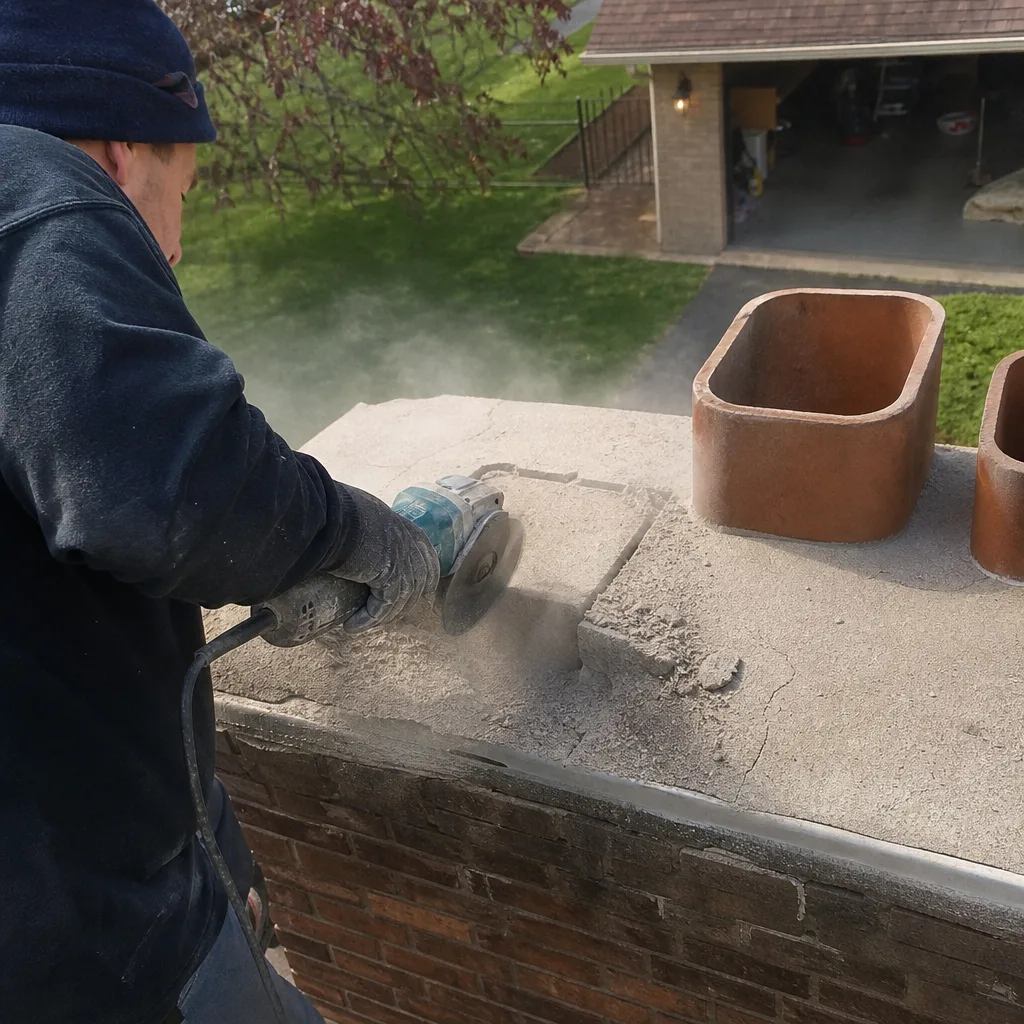
- Freeze-thaw spalling on the crown. Water enters micro-cracks in winter, expands when it freezes, and flakes off surface concrete. By April, the damage is fully expressed. We document it with photos because crown deterioration is progressive; catching it at Class 1 spalling means a crown repair with HeatShield or a pourable crown compound. Waiting until September often means the crack network has reached the flue tile, and water is entering the chase.
- Full creosote staging. Creosote accumulates in layers through the burn season. A pre-season cleaning in September removes what formed last year, but an April inspection shows the complete profile: Class I (soot, easily brushed), Class II (crunchy flakes, requires chains or rotary tools), or Class III (glazed, tar-like, requires chemical treatment and mechanical removal). Class III creosote in April means your burning habits or fuel moisture content needs adjustment before next season. It also means the flue was operating closer to its safety margin than you knew.
- Flashing gaps from winter heave. Hoffman Estates’s clay-heavy soils expand and contract with freeze-thaw, and that movement transmits to the chimney structure. Step flashing and counterflashing that were tight in October often show gaps by April. Water staining on the attic side of the chimney chase is visible evidence; the camera inspection catches it before it reaches the ceiling drywall.
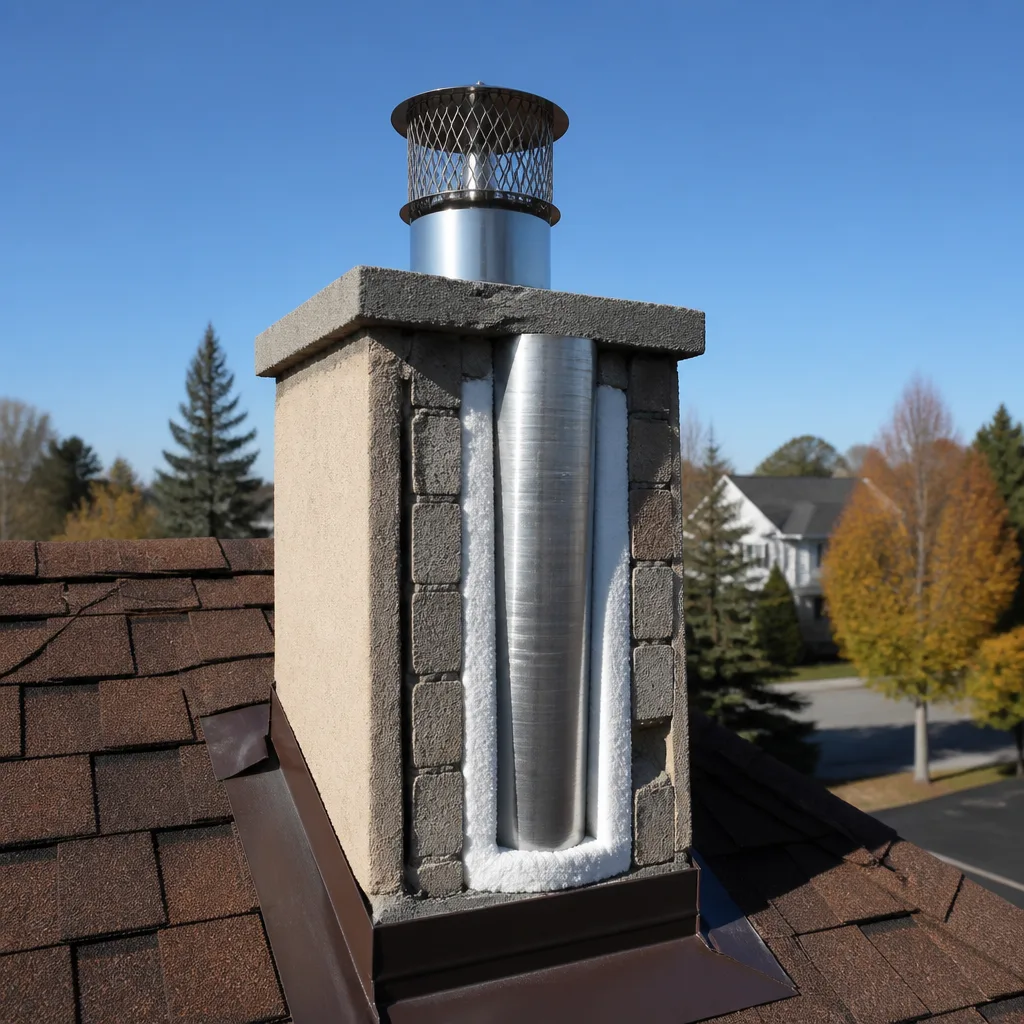
- Liner stress indicators. Stainless steel liners (DuraFlex is the brand we install most often) develop fatigue at flex points after sustained firing. A camera scan in April shows whether the liner has shifted, developed a low spot where condensate pools, or pulled away from the top plate. Clay tile liners show vertical cracking from thermal shock, especially in homes built in the 1970s and 1980s around the Hoffman Estates Golf Club and Winston Knolls areas.
The April-May window is also when we can schedule your appointment without the September rush. Our technicians aren’t racing to get homeowners “ready to fire” before the first cold snap. We have time to run the camera slowly, document everything, and deliver a written scope with pricing before you decide what to address now versus what to defer.
One more Hoffman Estates-specific note: the village’s building department sees permit applications for chimney repair spike in September and October. If your April inspection reveals work that requires permitting, scheduling the repair for May or June means faster permit turnaround and your choice of appointment slots.
June-August: The Off-Season Window for Repairs and Upgrades
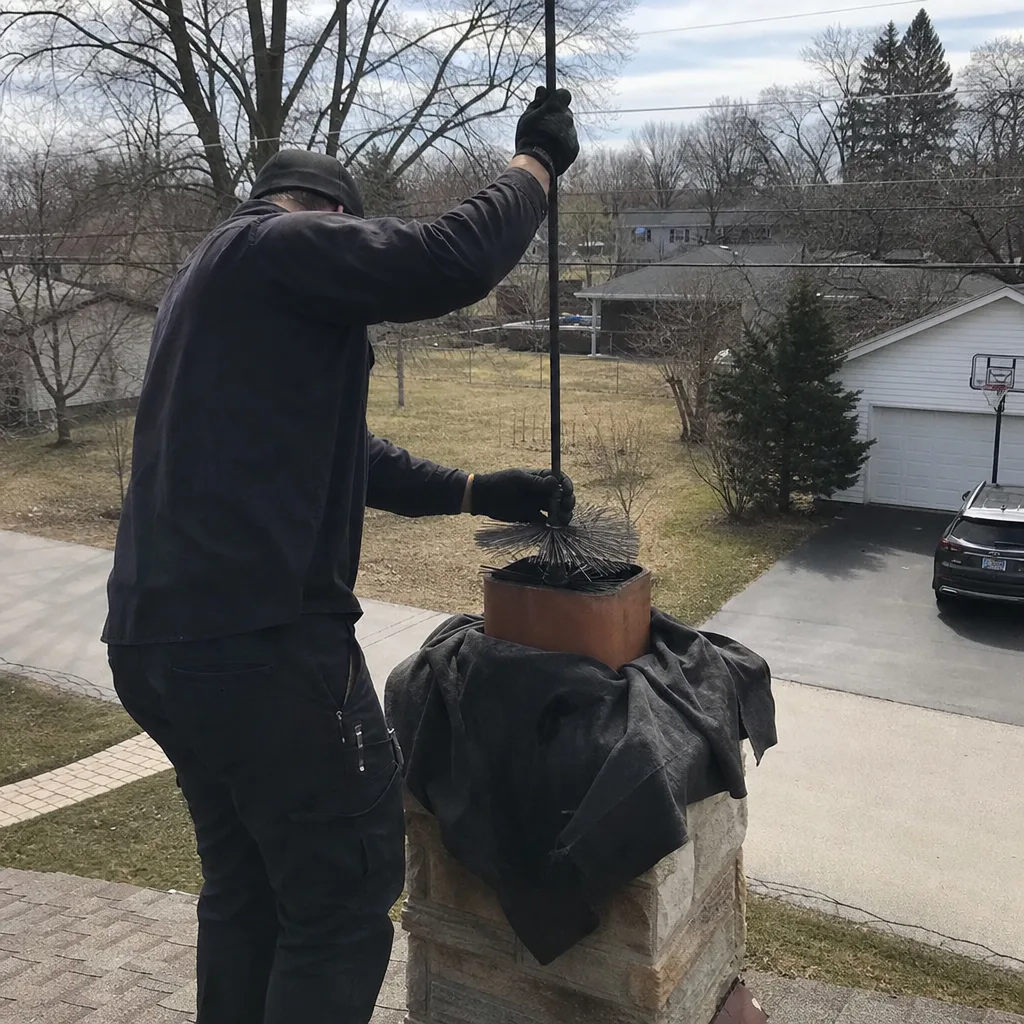
June through August is when we do our most significant repair and upgrade work in Hoffman Estates. The flue is dry, the roof is safe to walk without frost hazard, and materials cure properly in warm weather. If your April inspection identified any of the conditions above, this is when you address them.
Here’s what the off-season schedule looks like for different repair types:
- Liner replacement or relining. A stainless steel liner from DuraFlex or a cast-in-place HeatShield application both require a dry flue and ambient temperatures above 50°F for proper curing. We schedule these for June and July in Hoffman Estates. A full liner replacement takes one to two days; a HeatShield resurfacing of a sound but pitted clay tile flue takes a day. Both include the documented photo record required by Clause 4 of the Haven Standard.
- Crown rebuild or cap replacement. Crown pours need 48-72 hours of dry weather to cure without washout. Hoffman Estates’s June thunderstorm pattern means we watch the forecast closely, but July and early August are reliably dry enough. Gelco and Famco caps we source through Haven’s buying network are measured and fabricated to fit your flue count and chase dimensions, not pulled from a standard-size rack.
- Smoke chamber parging. The smoke chamber, the area above the firebox and below the flue, is often corbeled brick with rough surfaces that collect creosote. Parging with a refractory mix smooths the surface and improves draft. This work requires the fireplace to be out of service for 72 hours minimum; mid-July is ideal in Hoffman Estates, when you’re not sacrificing a single evening fire.
- Exterior masonry and tuckpointing. Spalled brick, deteriorated mortar, and water penetration are addressed when the wall is dry and temperatures allow proper mortar cure. We use Olympia Chimney materials for compatible mortar mixes on historic and modern chimneys alike.
The cost advantage of off-season scheduling is real but secondary. The primary benefit is thoroughness: our technicians aren’t working under the pressure of an impending cold snap, and we have time to source specialty materials through our Haven network rather than substituting what’s in stock.
One practical note for Hoffman Estates homeowners in neighborhoods like Highland Woods or Pleasant Acres with mature lot coverage: summer is when we can also assess whether tree limb contact with the chimney is causing cap damage or blocking the flue termination. We’ll flag this in your written scope if we see it.
September: The Pre-Season Cleaning and “Ready to Fire” Protocol
September is the appointment most homeowners know to make, and it’s important. But we want to be precise about what “ready to fire” actually means, because the phrase gets used loosely in this industry.
At Level Two Chimney Hoffman Estates home, a pre-season cleaning and inspection in September includes the following documented steps:
- Mechanical sweep of the flue. We use rotary polypropylene brushes sized to your flue diameter, not a weight on a rope. The goal is removal of all soot and loose creosote, verified by camera after sweeping.
- NFPA 211 Level 2 camera inspection. The camera goes down the flue on every September visit, even if we inspected in April. Conditions change: summer humidity can accelerate liner corrosion in gas flues, and animals may have nested in the cap since spring. Clause 4 of the Haven Standard requires this photo record on every job without exception.
- Firebox and smoke chamber visual inspection. We check for cracked firebrick, deteriorated mortar, and proper damper operation. The damper should open fully, seat cleanly when closed, and show no daylight around the perimeter when shut.
- Exterior assessment: cap, crown, flashing. We verify that any April-recommended repairs were completed and are holding, and we check for new damage from summer storms. Hoffman Estates’s July derecho risk means cap displacement from wind gusts is not uncommon.
- Functional test. With the damper open, we verify draft direction and measure draft pressure if conditions allow. A negative pressure environment in a tightly sealed modern home can cause draft reversal; we note this and recommend solutions if present.
- Written scope, written price, written warranty. Before any work beyond the standard sweep begins, you receive a written document with the findings, the recommended work, the flat price, and the warranty terms. Haven Standard Clause 1, H.A.V.E.N. “Have it in writing.” No exceptions.
September appointments in Hoffman Estates book 2-3 weeks out by mid-month. We recommend calling by August 15 to secure your preferred date. The first sustained fire in a Hoffman Estates home typically happens in early October, when nighttime temperatures drop into the 40s; your chimney should be inspected and cleaned before that first fire, not after you’ve already burned a week “to see if it’s okay.”
One local factor: Hoffman Estates’s newer construction in areas like the Town Center district includes direct-vent gas fireplaces that don’t require traditional sweeping but do require annual burner, vent, and safety control inspection. We handle these as part of our fireplace services; the September appointment is the right time.
November-March: Mid-Season Monitoring and When to Call
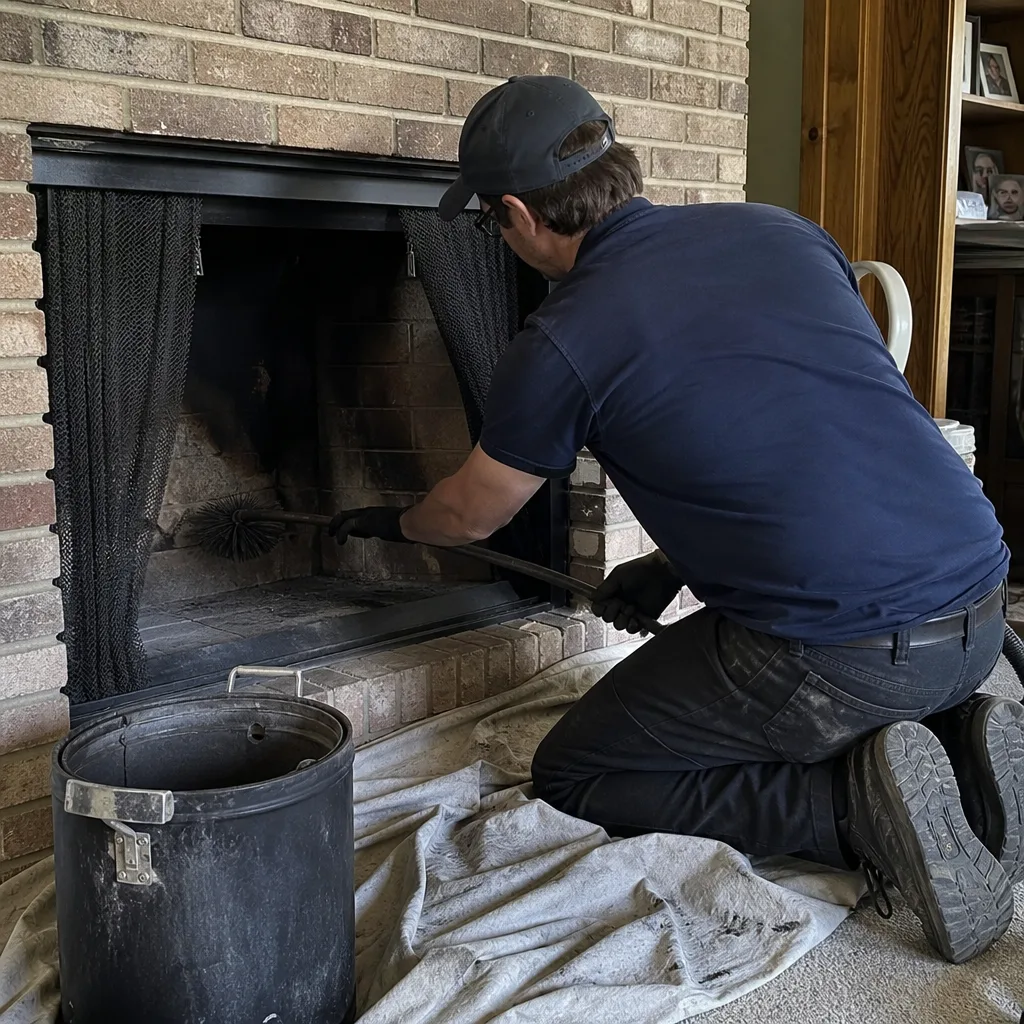
The heating season in Hoffman Estates runs from late October through mid-April. Once you’re burning regularly, certain changes in performance indicate that conditions inside the flue have shifted and a mid-season sweep or inspection is warranted.
We do not recommend routine mid-season sweeping for every homeowner. But we do recommend watching for these specific triggers:
- Odor changes. A sharp, acrid smell when the furnace or fireplace is not running often indicates creosote buildup reaching a critical mass, or water entry mixing with soot to form acidic compounds. In Hoffman Estates, this is most common in January and February after sustained cold snaps when the chimney has been under continuous draft.
- Smoke rollout into the room. If smoke enters the living space when it didn’t before, the cause is usually obstructed airflow: creosote narrowing the flue, a damper partially closed by debris, or a cap blocked by ice or animal nesting. This is a safety issue; stop using the fireplace and call for inspection.
- Draft reversal on startup. If smoke initially enters the room before drafting upward, the chimney may be cold-soaked after a period of disuse, or the house may be under negative pressure from exhaust fans. Persistent reversal, not a one-time startup puff, indicates a problem.
- Visible creosote flakes in the firebox. If you’re seeing shiny black flakes on the hearth or firebrick, creosote is shedding from the flue wall. This means the accumulation is substantial enough that gravity and temperature cycling are dislodging it.
- Changes in burn characteristics. A fire that previously burned bright and clean now smolders, or requires more frequent reloading, suggests restricted airflow in the flue.
When any of these occur, we perform a targeted mid-season inspection with camera verification. In many cases, a partial sweep of the affected area resolves the issue. In some cases, we find that the April-predicted liner deterioration or crown damage has progressed faster than expected, and we recommend addressing it before the season ends or scheduling for June.
Carbon monoxide risk increases with obstructed or damaged flues. We don’t use scare tactics, but we do state the fact: a properly functioning flue vents combustion gases. A compromised flue does not. If you’re experiencing any of the symptoms above, the inspection is not optional maintenance; it’s verification that your venting system is performing its safety function.
Our 24/7 live phone support means you can describe symptoms and get guidance on whether to stop using the system immediately or schedule a routine appointment. The technician who responds is trained to ask the right questions, not to book every call as an emergency.
How Hoffman Estates’s Tree Canopy Affects Your Chimney Calendar
This is the local factor almost no competitor addresses. Hoffman Estates has extensive mature tree canopy, particularly in established neighborhoods like Winston Knolls, Highland Woods, and the areas surrounding Paul Douglas Forest Preserve. The dominant species are white oak, red oak, and silver maple, with significant Norway maple plantings from the 1970s and 1980s.
These trees produce debris on different schedules, and that debris affects your chimney:
- Spring (April-May): Oak catkins and pollen release. The stringy, fibrous material clings to moisture and accumulates in caps with mesh screens. If your April inspection follows a heavy pollen year, we often find the cap screen partially occluded. This is when we recommend cleaning the cap screen as part of the post-season service, not waiting until September.
- Late spring (May-June): Silver maple samaras (the “helicopters”) and oak leaf drop from spring storms. These are lightweight and easily drawn into the flue if the cap is missing or damaged. A June cap inspection after maple samara season is prudent in heavily treed lots.
- Fall (September-November): The main leaf drop. Oak leaves are leathery and persistent; they don’t decompose quickly and can block cap screens if wind-driven. A September pre-season cleaning that doesn’t include cap screen verification is incomplete. We check and photograph the screen condition as part of our standard protocol.
- Year-round: Wildlife activity. Mature trees provide squirrel and raccoon highway access to chimneys. Hoffman Estates’s wildlife population is healthy, and cap damage from animal traffic is a common April finding. We install Gelco and Famco caps with animal-proof mesh as standard; retrofitting a damaged cap is often a June project.
The practical implication: if your home is in a heavily treed section of Hoffman Estates, your chimney maintenance calendar should include a cap-specific check in both spring and fall, not just the standard flue cleaning. We note tree canopy proximity in our client records and adjust our inspection focus accordingly.
What Seasonal Chimney Maintenance Costs in Hoffman Estates
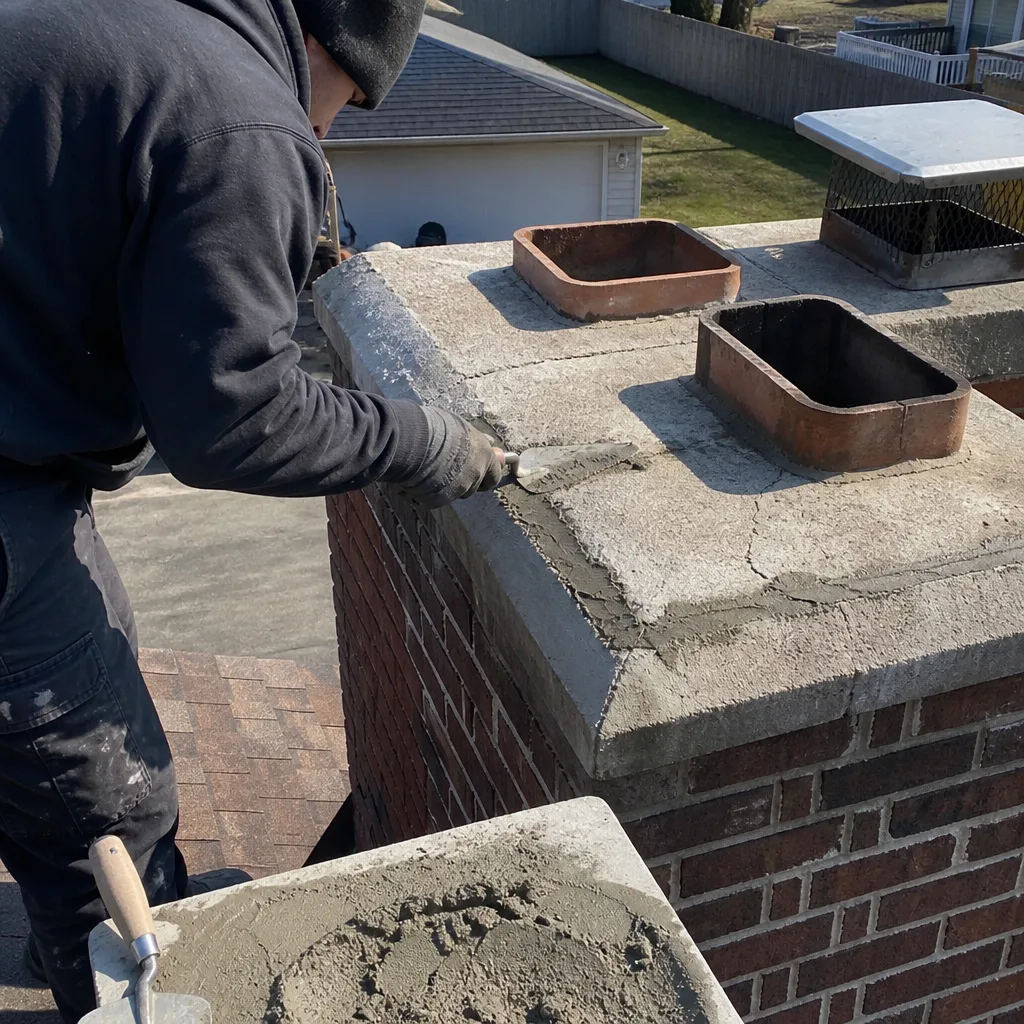
We put prices on the page because “call for a quote” wastes your time and ours. These are the ranges for Hoffman Estates as of 2024, based on our 38,000+ completed jobs since 2009. Every job is quoted in writing before work begins, with no variance between estimate and invoice.
| Service | Typical Range | What’s Included |
|---|---|---|
| Standard chimney sweep with Level 2 camera inspection | $249-$349 | Mechanical flue cleaning, full camera scan, photo record, written findings |
| Class III creosote removal (chemical + rotary) | $450-$750 | Pre-treatment application, mechanical removal, verification scan |
| Crown repair (crack sealing or partial rebuild) | $350-$850 | Surface prep, HeatShield or pourable crown compound, cure protection |
| Stainless steel liner installation (DuraFlex) | $2,800-$4,500 | Liner, insulation, top plate, connector, documentation |
| HeatShield cast-in-place liner resurfacing | $1,800-$3,200 | Surface prep, application, cure verification, photo record |
| Cap replacement (fabricated, animal-proof) | $280-$550 | Measurement, fabrication, installation, screen verification |
| Smoke chamber parging | $1,200-$2,400 | Surface prep, refractory application, cure, inspection |
| Exterior tuckpointing (per square foot) | $18-$32 | Grind, repoint, color match, cleanup |
These ranges reflect our Haven Standard pricing: materials sourced through our buying network from Copperfield, DuraFlex, HeatShield, Gelco, Olympia Chimney, and Famco, with no markup surprises. The written price you receive before work starts is the price on the invoice.
We also offer a Free Second Opinion on any written estimate from another company. Bring us their scope and pricing; we’ll review it against what we find in our own inspection and tell you where the differences are.
What Documentation You Should Receive After Every Visit
Documentation is not a bonus; it’s the core of what distinguishes a professional sweep from a person with a brush. After every visit to your Hoffman Estates home, you should walk away with:
- Written findings report. What we found, where we found it, and what it means for safe operation. Plain language, no jargon without definition.
- Photo record from the camera inspection. Clause 4 of the Haven Standard requires this on every job. You see what we see: liner condition, creosote accumulation, crown integrity, firebox status. These photos are yours to keep and to share with your insurance company or home inspector if needed.
- Written scope of recommended work. If additional work is needed, it’s itemized with flat pricing for each item. You choose what to approve; nothing proceeds without your written authorization.
- Written warranty. The 365-Day Done Right Promise covers all work we perform. If it’s not done right, we make it right. The warranty terms are specified in writing, not implied.
- Service record for your files. Date of service, technician name, findings summary, and next recommended service date. This builds the maintenance history that adds value at sale and satisfies insurer requirements.
If you’ve used a sweep company that delivered a verbal “everything looks fine” and a carbon-copy receipt, you haven’t received an inspection. You’ve received a brushing. The difference matters for safety, for resale, and for your own knowledge of the condition of a critical home system.
Common Mistakes to Avoid
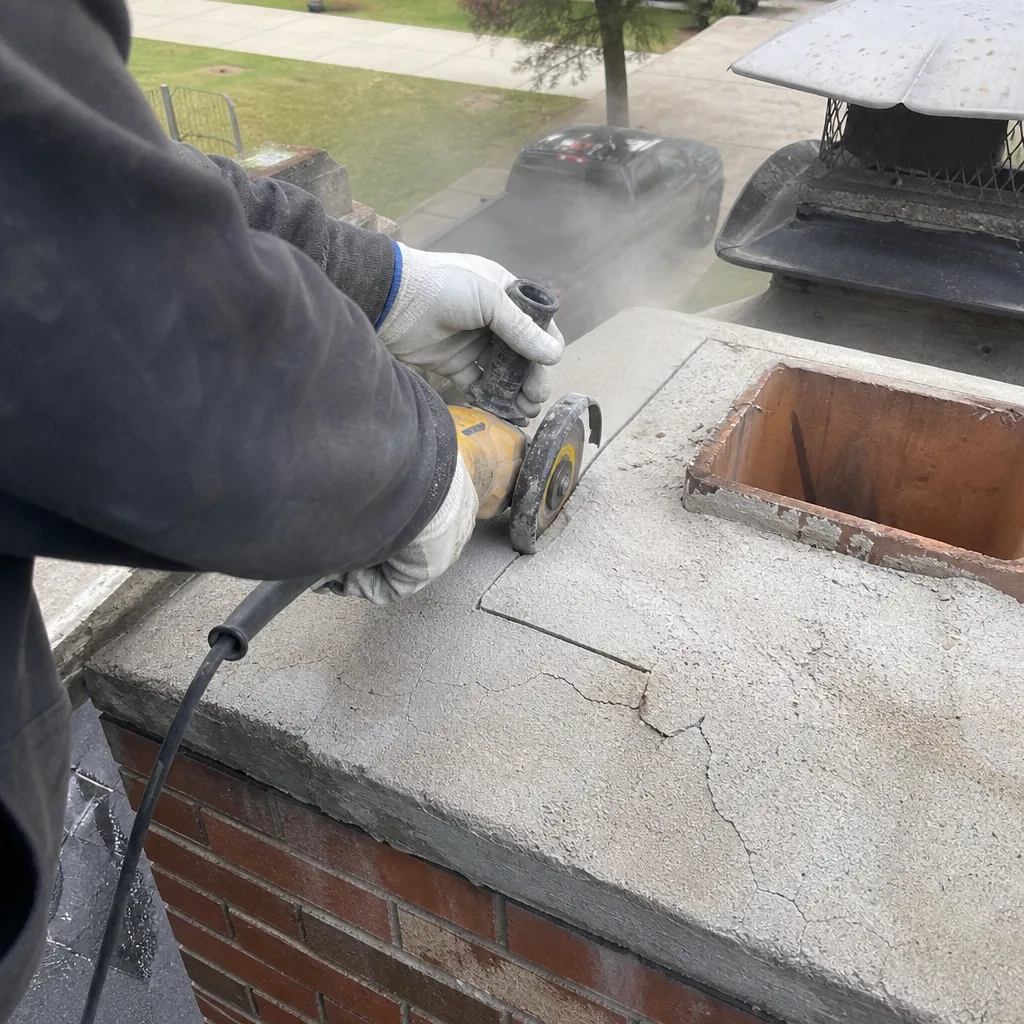
- Skipping the April inspection because “we just had it cleaned in September.” The September cleaning prepares you for the season; the April inspection assesses what the season did. They’re different appointments with different diagnostic value. In Hoffman Estates’s 180-day heating climate, the April findings are often more consequential.
- Assuming gas fireplaces need no maintenance. Direct-vent gas systems don’t produce creosote, but they do produce condensate that corrodes liners, and their vent terminals can be obstructed by debris or animal nesting. Annual inspection is still required by manufacturers and insurers.
- Waiting for visible damage before calling. By the time you see water staining on a ceiling or smell smoke in a room, the underlying chimney problem has progressed through multiple stages. Camera inspection catches it when repair is localized and less expensive.
- Accepting “it looks good from down here” as an inspection. A flashlight look from the firebox or roof top is not an NFPA 211 Level 2 inspection. The camera must travel the full flue length. Anything less is guesswork, and guesswork is not documentation.
- Ignoring cap maintenance in treed lots. Hoffman Estates’s oak and maple canopy produces debris year-round. A cap with a clogged screen forces the flue to work harder, accelerates creosote buildup, and can reverse draft in extreme cases. Screen cleaning is part of proper maintenance, not an upsell.
- Scheduling repairs for September when June was available. The rush for pre-season appointments means less technician time per job, longer waits for materials, and higher likelihood of weather delays. Off-season repair scheduling is better for the work and better for your calendar.
- Not requesting the photo record. Some companies charge extra for camera documentation or don’t provide it at all. Under Clause 4 of the Haven Standard, it’s included on every job. If your sweep can’t show you what they found, they didn’t find it; they guessed.
When to Call a Professional
Call for a professional chimney inspection when you notice any change in performance: odors, smoke rollout, draft reversal, or visible debris. Call before the first fire of the season, every season, with no exceptions. Call after any chimney fire event, even a small one, because thermal shock damages liners in ways not visible without camera verification. Call if you’re buying a home in Hoffman Estates and the seller’s disclosure includes no chimney documentation; a Level 2 inspection is standard due diligence. Call if your insurance company requests proof of maintenance; we provide the documented record they need.
Level Two Chimney Hoffman Estates offers free estimates in Hoffman Estates. Call (331) 200-4445 to schedule your post-season inspection, pre-season cleaning, or off-season repair consultation. Live phone support is available 24 hours a day, 7 days a week.
Frequently Asked Questions
A standard chimney sweep with NFPA 211 Level 2 camera inspection typically runs $249-$349 in Hoffman Estates. Class III creosote removal or additional repairs are quoted separately in writing before any work begins. Call (331) 200-4445 for an exact quote; estimates are free.
We recommend a two-appointment rhythm for Hoffman Estates’s 180-day heating season: a post-season inspection in April-May and a pre-season cleaning in September. Homes with heavy use (more than three fires weekly) or older systems may need additional mid-season attention if performance changes are observed.
It depends on what the camera shows. Clay tile liners with isolated cracking can often be resurfaced with HeatShield cast-in-place application. Stainless steel liners from DuraFlex are the right solution when the clay tile is extensively damaged, shifted, or missing. We don’t recommend replacement without photo evidence you can see for yourself, and we’ll tell you plainly when repair is sufficient and safe. Call (331) 200-4445 for a free second opinion on any replacement recommendation.
Skipped maintenance leads to creosote accumulation, which increases chimney fire risk, and to undetected liner or crown damage, which increases carbon monoxide intrusion and water damage risk. In Hoffman Estates’s freeze-thaw climate, minor crown cracks progress to major water entry within one to two seasons. The cost of deferred maintenance is always higher than the cost of scheduled maintenance.
Yes. The September cleaning removes pre-season debris and verifies readiness. The April inspection assesses the cumulative effects of the full burn season: creosote class, liner fatigue, freeze-thaw damage, and flashing integrity. In our experience across 38,000 inspections, the April findings change the recommended scope in about 40% of cases compared to the September baseline.
A Level 1 inspection is a visual examination of accessible portions of the chimney, appropriate for annual maintenance when no changes have occurred. A Level 2 inspection includes a camera scan of the full flue interior, accessible portions of the attic and basement, and documentation of all findings. We perform Level 2 as our default on every visit because it’s the only method that produces verifiable evidence of flue condition.
We don’t recommend DIY chimney cleaning for Hoffman Estates homeowners. Proper cleaning requires matching brush diameter to flue size, knowing when rotary tools are needed for creosote removal, and verifying results with camera inspection. More importantly, the safety-critical assessment of liner condition, crown integrity, and structural soundness requires training and equipment that aren’t cost-effective for one-time homeowner use. For the cost of proper tools and the risk of incomplete work, professional service is the sound choice.
The Bottom Line
Hoffman Estates’s climate demands a seasonal approach to chimney care, not a single annual appointment. The April post-season inspection reveals what winter did. The summer months provide the best conditions for repairs and upgrades. The September pre-season cleaning verifies safe operation before the first fire. And mid-season monitoring from November through March catches problems before they become hazards. Document every step with photos, written scopes, and written warranties. And never approve work without seeing the evidence that supports it.
Written by Corrine Halstead, Owner at Level Two Chimney Hoffman Estates, serving Hoffman Estates since 2009.