
Last updated September 22, 2026
Level 1 sweep and inspection to the NFPA 211 annual standard - flue, crown, cap, and flashing checked and photographed
Chimney sweep logs do not sweep chimneys. They loosen some creosote - which then falls where a brush and vacuum still have to collect it.
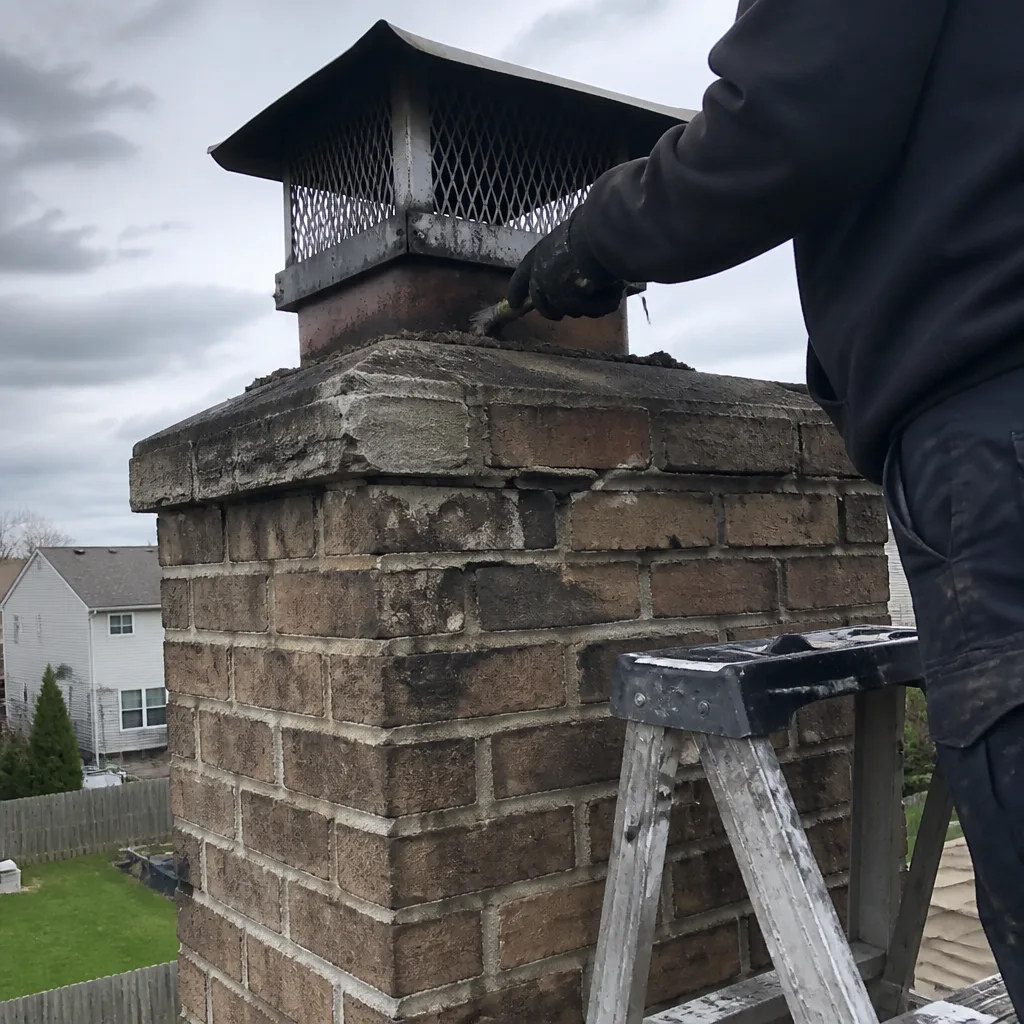 Before
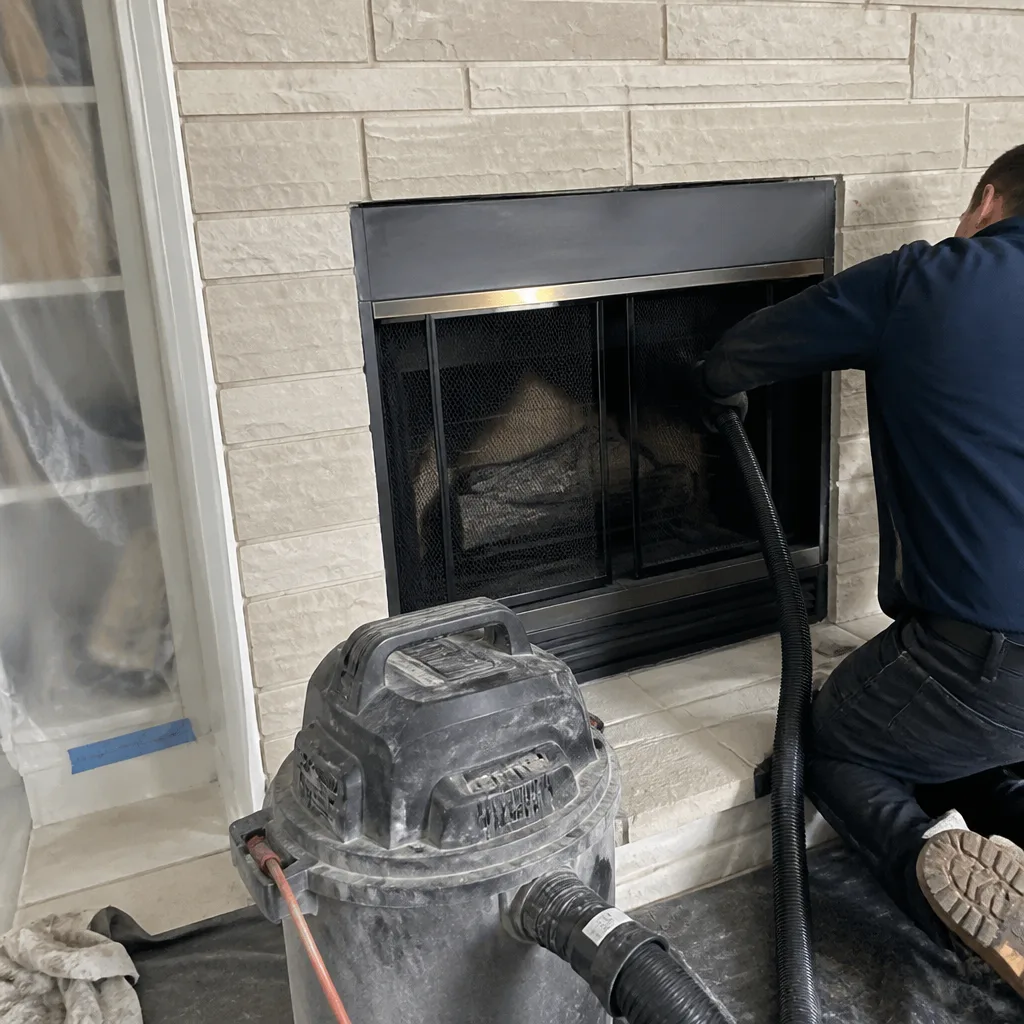 After
After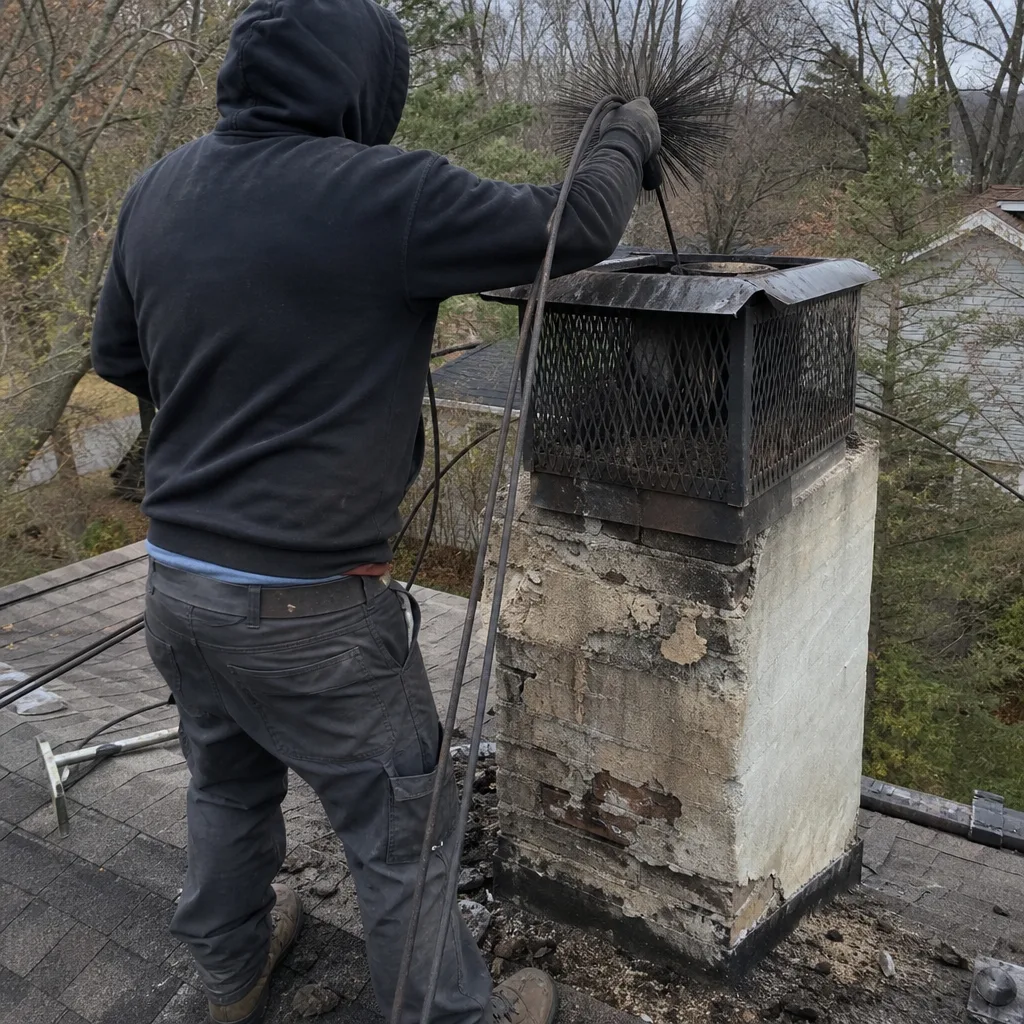 Before
 After
After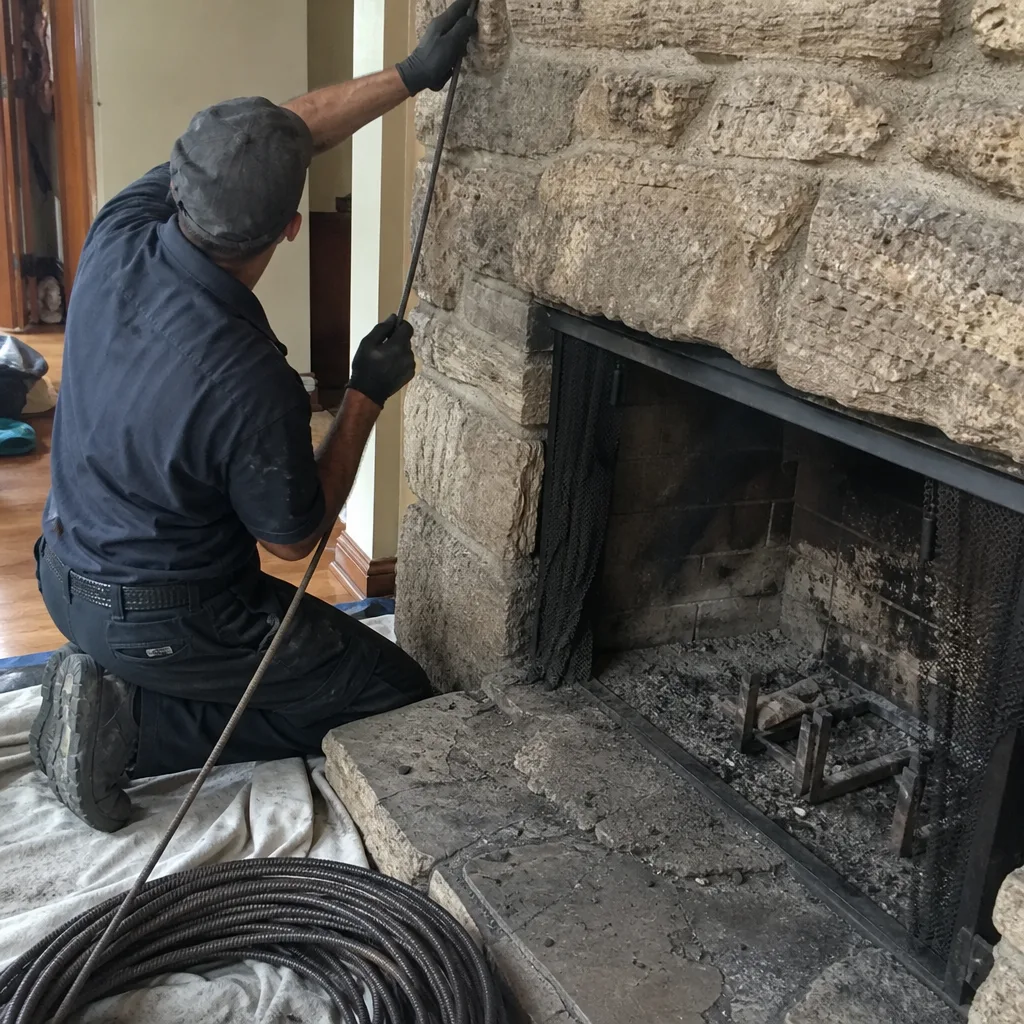 Before
 After
AfterChimney Cleaning & Sweep Maintenance Checklist for Hoffman Estates Homeowners
Most chimney checklists you’ll find online tell you to “check for creosote buildup” as a weekend homeowner task. Here’s the problem: third-degree creosote, the glazed, tar-like deposit responsible for most chimney fires in Hoffman Estates and across the Midwest, is visually indistinguishable from a clean flue tile when you’re looking up from the firebox with a flashlight. You cannot check for it without a camera on a flexible rod and training in NFPA 211 classification. In this guide, we’ll draw a hard line between what you can verify with your eyes from the ground and what requires a certified sweep with documented equipment, so you know exactly which items belong on your fall checklist and which belong on our Chimney Cleaning & Sweep services.
Quick Answer
A complete chimney maintenance checklist for Hoffman Estates homeowners includes two distinct categories: owner-observable items you can assess from the roof or firebox (crown condition, cap presence, visible mortar spalling, damper operation) and sweep-only items requiring camera inspection (flue liner integrity, creosote stage classification, smoke chamber condition). In Hoffman Estates’ climate, with freeze-thaw cycles from October through April, schedule the sweep-only inspection in late September before the first fire, and perform your visual check monthly during burn season.
Table of Contents
- Owner-Observable Items: What You Can Check Yourself
- Sweep-Only Items: What Requires Camera and Training
- Hoffman Estates Timing: When to Schedule What
- The Maintenance Log: What to Record for Insurance and Resale
- Red-Flag Conditions: When Routine Becomes Urgent
- What to Expect During a Level 2 Inspection
- Common Mistakes to Avoid
- When to Call a Professional
- Frequently Asked Questions
 Before
 After
AfterOwner-Observable Items: What You Can Check Yourself
These five checks require no special equipment beyond a flashlight, binoculars, and a ladder if you’re comfortable on your roof. If you’re not, note the ground-visible items and leave the roof work for us.
1. Crown Condition (Roof or Ground with Binoculars)
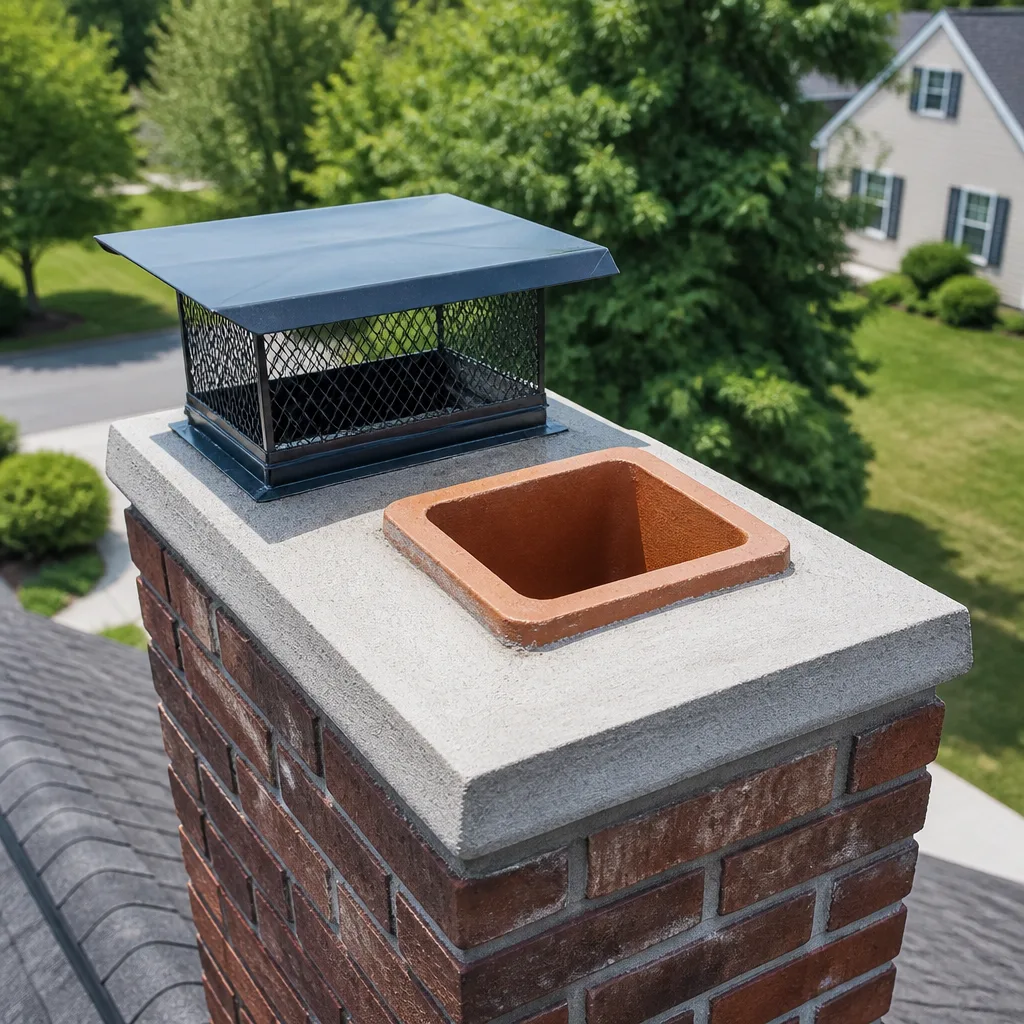
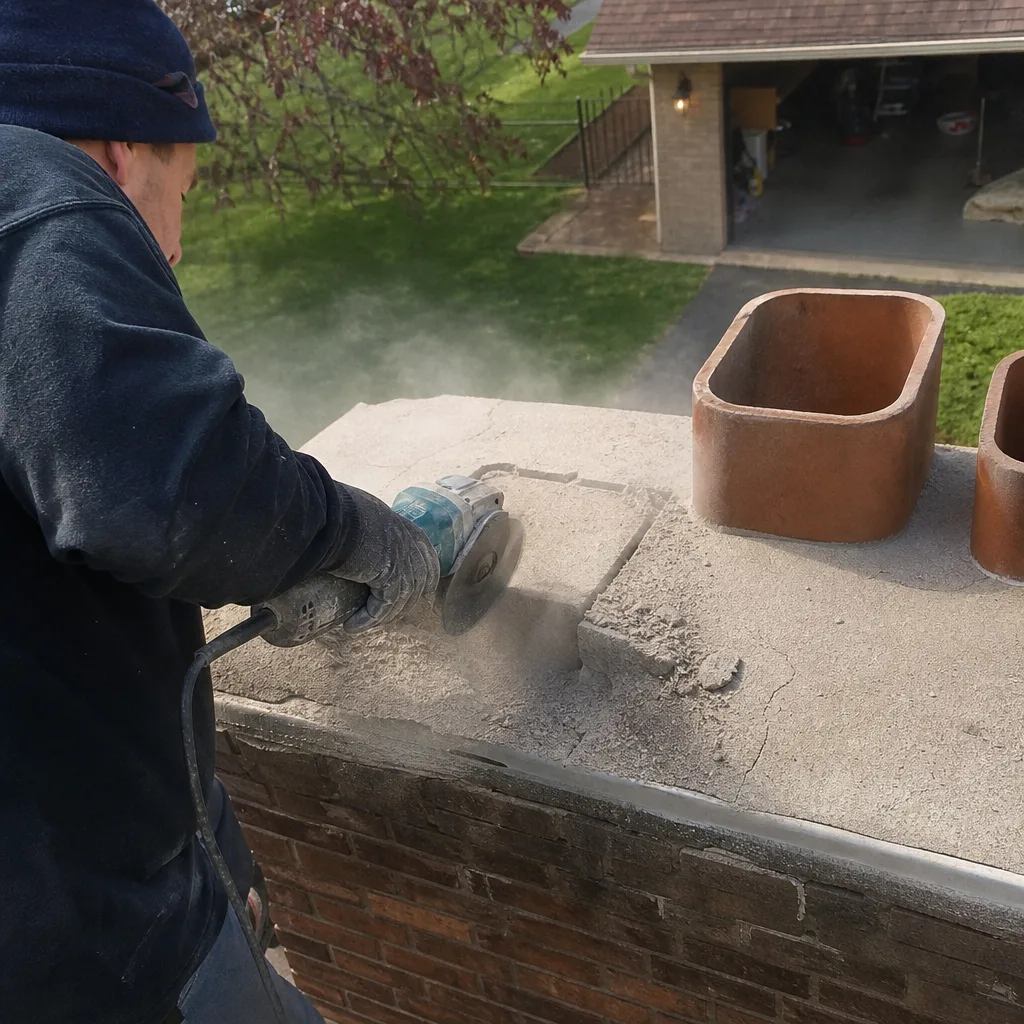
The crown is the concrete or mortar cap that seals the top of your chimney where the flue tiles exit. In Hoffman Estates, we see accelerated crown deterioration from the combination of freeze-thaw cycling and de-icing salt mist carried on winter winds from treated roads.
Pass: Crown is intact with no visible cracks wider than a hairline. Slight slope directs water away from flue openings.
Fail: Cracks wider than 1/8 inch, chunks missing, or pooling water on the crown surface. Spalling (flaking concrete) that exposes aggregate beneath.
Photograph the crown from the same angle each fall. Compare year-over-year. A crack that widens from hairline to pencil-width in one season indicates active water intrusion and needs professional evaluation.
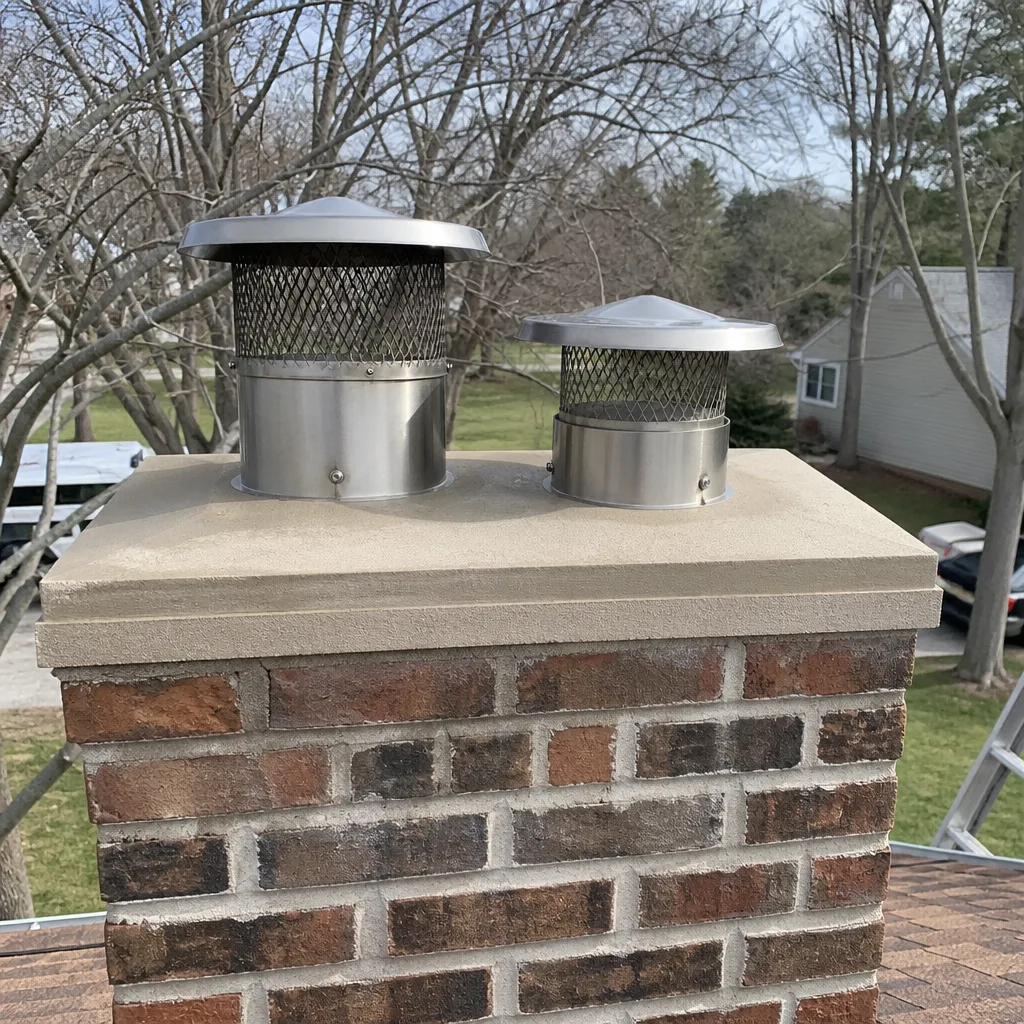
2. Chimney Cap Presence and Condition
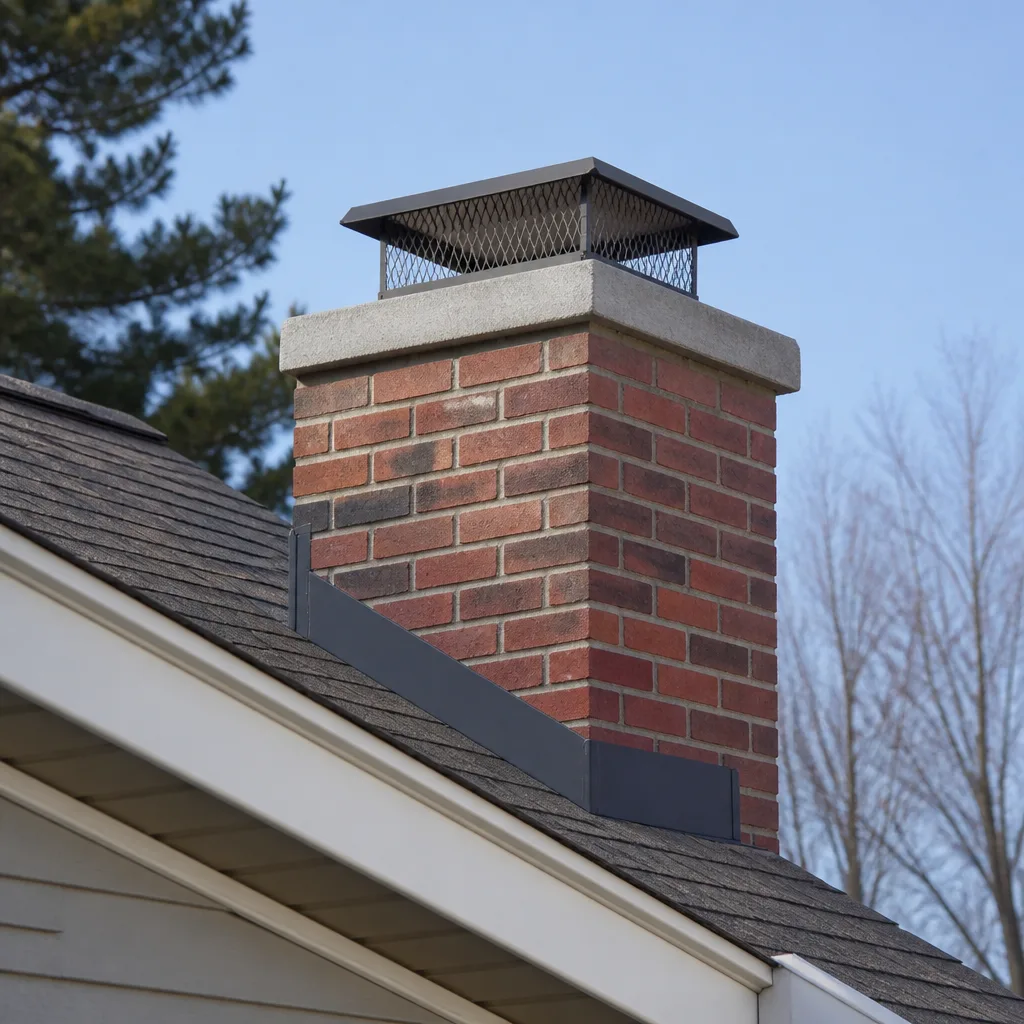
The cap is the metal cover with mesh sides that sits atop your flue. It excludes rain, animals, and wind-blown debris.
Pass: Cap is present, securely attached, and mesh is intact with no gaps larger than 3/4 inch. Stainless steel or copper shows no rust-through.
Fail: Missing cap, detached or tilted cap, rust holes in mesh, or mesh clogged with leaves or nesting material. In Hoffman Estates’ mature subdivisions like Barrington Square and Winston Knolls, we remove squirrel and raccoon nests from uncapped flues every October.
3. Visible Mortar and Brick Spalling
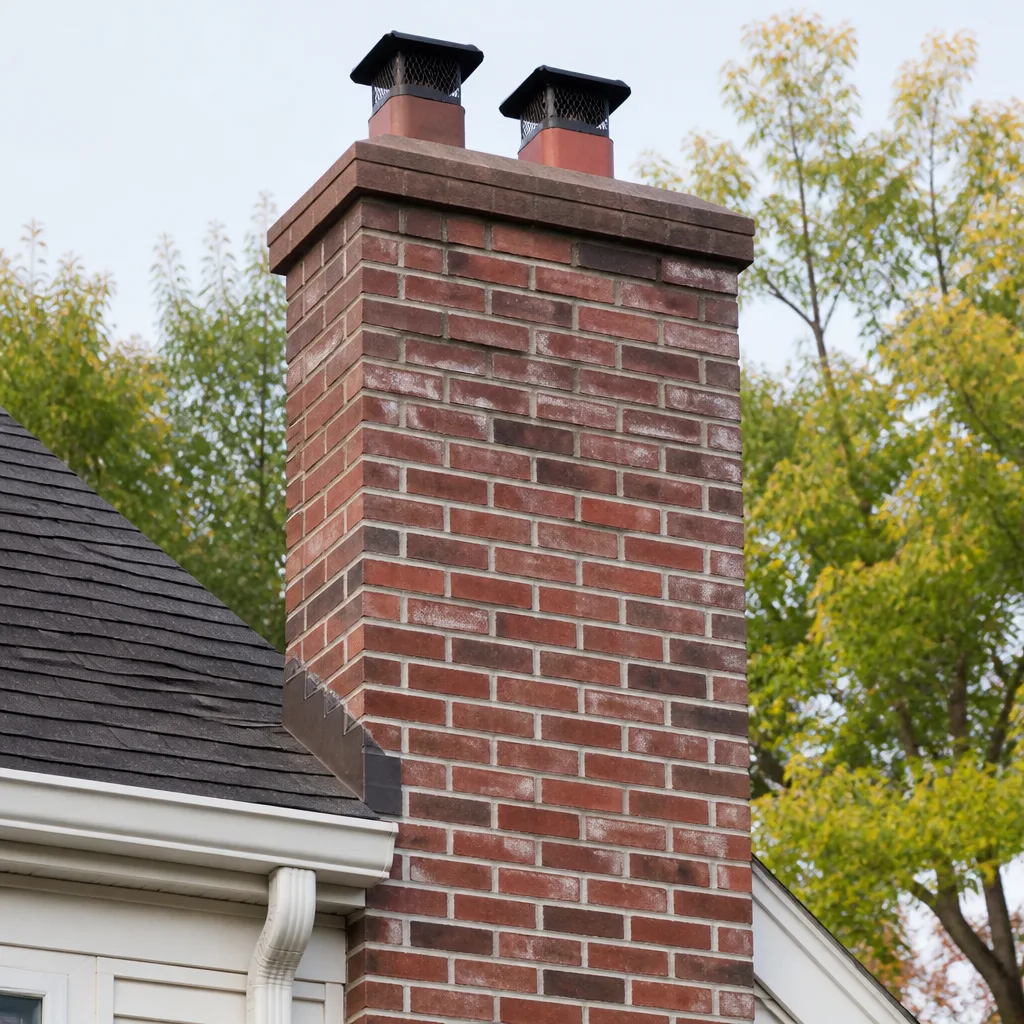
Stand back from your chimney and scan the brick courses. Spalling occurs when water freezes in the brick face, popping off the front surface and exposing the softer interior.
Pass: Brick faces are intact. Mortar joints are recessed no more than 1/2 inch from the brick face.
Fail: Bricks with flaked or missing faces, mortar joints eroded deeper than 1/2 inch, or individual bricks that sound hollow when tapped. In our experience across Hoffman Estates, homes built during the 1980s construction boom often show accelerated spalling where original lime mortar has failed.
4. Damper Operation
The damper is the metal plate above the firebox that opens to let smoke exit and closes to block conditioned air loss when the fireplace is idle.
Open the damper fully. You should feel it seat firmly and see daylight at the flue opening. Close it completely. No light should be visible, and the handle or chain should tension fully without grinding.
Fail indicators: Handle spins freely without plate movement, visible rust holes in the plate, or the plate stuck in a partially open position. A stuck-open damper in a Hoffman Estates winter costs significant heating dollars and indicates creosote or debris interference.
5. Firebox and Hearth Condition
With the damper open and flashlight aimed upward, inspect the firebox walls and floor.
Pass: Firebrick faces are intact with no gaps wider than 1/16 inch. Hearth extension (the floor protection in front) shows no cracking or settling away from the firebox.
Fail: Cracked or missing firebricks, gaps that expose the metal or masonry behind, or a hearth that has dropped or separated from the firebox wall. These conditions allow heat transfer to combustible framing and require immediate professional evaluation.
Sweep-Only Items: What Requires Camera and Training
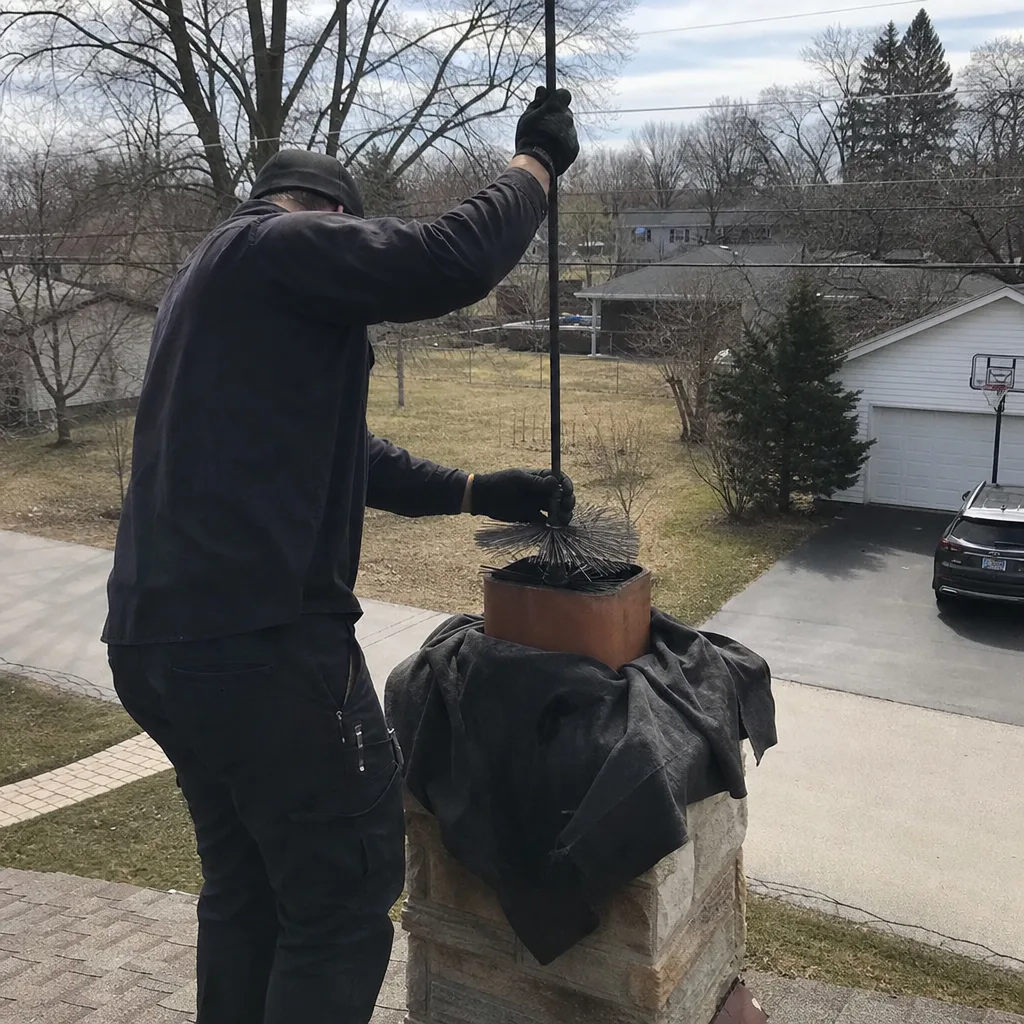
These four items cannot be assessed accurately without NFPA 211 Level 2 inspection equipment: a flexible video camera, proper lighting, and a technician trained in creosote classification and liner condition rating. Every item here is included in our standard Chimney Cleaning & Sweep in Hoffman Estates service.
1. Flue Liner Integrity
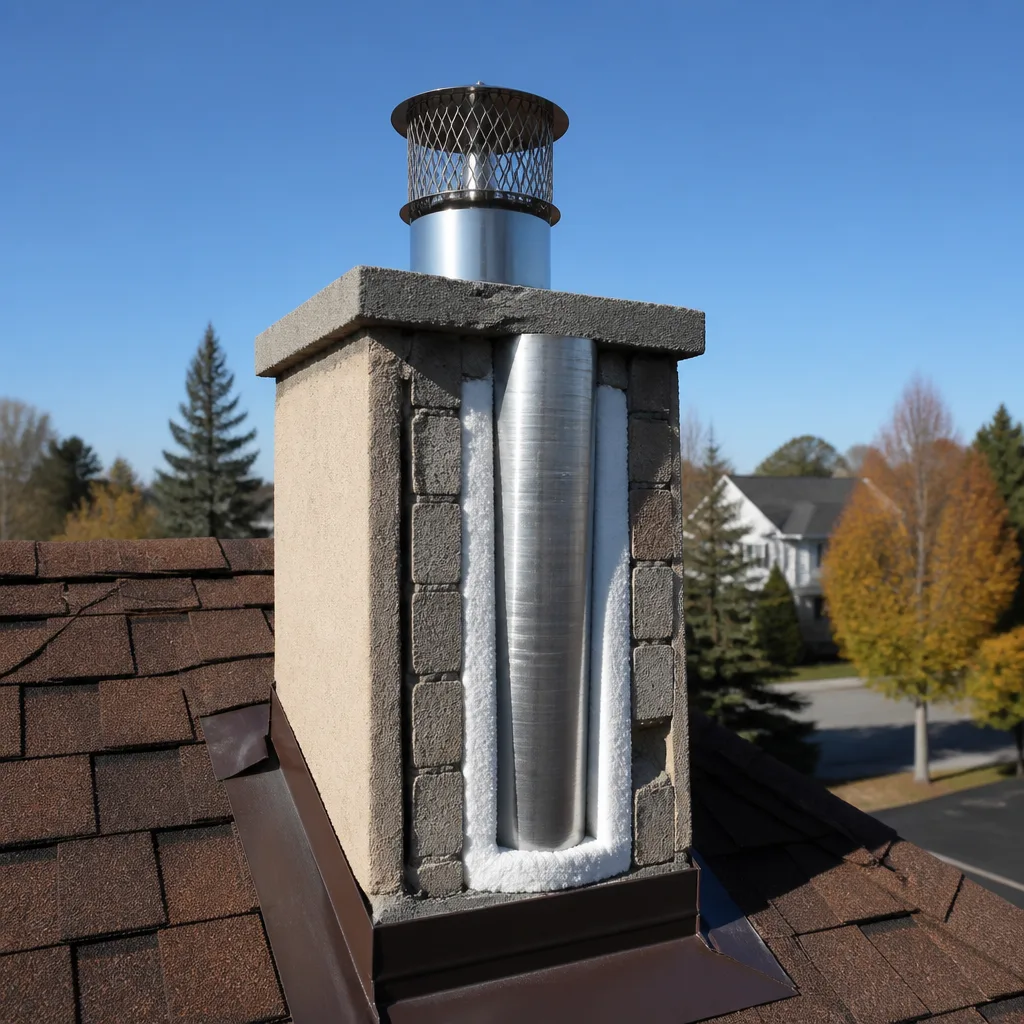
The flue liner is the clay, metal, or refractory cement channel that contains combustion gases and protects the surrounding house structure from heat. In Hoffman Estates, we encounter three liner types: original clay tile (most common in pre-1990 construction), stainless steel relining (common in 1990s-2000s updates), and cast-in-place refractory (less common, usually high-end installs).
A camera inspection reveals cracks, gaps between tile joints, mortar loss, and spalling of the liner surface that are invisible from the firebox. A cracked liner can allow 2000°F gases to reach combustible framing. We document liner condition with timestamped video and still frames under Clause 4 of the Haven Standard, a practice we’ve maintained since 2009.
What we classify: Hairline cracks (monitor annually), through-cracks requiring repair, missing tiles requiring relining, and liner displacement indicating structural movement.
2. Creosote Stage Classification
Creosote forms in three stages. Only Stage III (glazed, hardened tar) significantly elevates fire risk, and it cannot be distinguished from benign soot without direct camera observation and scraping, as detailed in our Chimney Cleaning Warning Signs: A Hoffman Estates Homeowner’s Reference Guide.
- Stage I: Fine, dusty soot. Removed easily with standard brushes. Low fire risk.
- Stage II: Crunchy, flaky deposits. Requires more aggressive mechanical cleaning. Moderate risk if thick.
- Stage III: Glazed, hardened, enamel-like coating. Requires rotary chains or chemical treatment. High fire risk; ignition temperature drops to approximately 450°F.
In Hoffman Estates, we see accelerated Stage III formation in homes that burn unseasoned hardwood or maintain smoldering fires overnight. The camera reveals the glaze’s glassy surface and color shift from black to dark brown, indicators invisible to homeowner inspection.
3. Smoke Chamber Condition
The smoke chamber is the area above the damper that funnels smoke into the flue. Building codes since the 1940s require it to be “parge-coated” with smooth refractory mortar, but many Hoffman Estates homes built in the 1970s and 1980s have rough, corbeled brick that creates turbulence and creosote accumulation points.
Camera inspection reveals:
- Exposed corbeling (stepped brick) that disrupts airflow
- Cracks in existing parge coating
- Soot and creosote buildup in chamber corners
- Structural separation between smoke chamber and flue
Smoke chamber repair, when needed, typically involves parging with Chamber-Tech 2000 or similar refractory materials from our Copperfield and HeatShield supply network.
4. Hidden Obstructions and Animal Entry
Beyond the cap check you can perform, camera inspection reveals partial blockages from deteriorated chimney internals: collapsed liner sections, nesting material that has fallen into the flue, and construction debris from original build or previous repairs. In Hoffman Estates’ established neighborhoods like Highland Woods and Pleasant Acres, we’ve found decades-old bird nests and deteriorated mortar chunks completely blocking flues in homes where owners reported “some drafting issues.”
Hoffman Estates Timing: When to Schedule What
Hoffman Estates sits in USDA Hardiness Zone 5b, with first frost typically in mid-October and last frost in late April. This defines your burn season and your maintenance calendar.
| Timing | Homeowner Action | Professional Service |
|---|---|---|
| Mid-September | Visual inspection of crown, cap, and exterior | Schedule Level 2 inspection and sweep; beat October rush |
| October 1-15 | Test damper operation; check firebox | Complete sweep before first fire |
| Monthly (Nov-Mar) | Ground-level cap and crown check after storms | Call if draft changes, odors increase, or visible debris appears |
| April (burn season end) | Final visual inspection; photograph condition | Schedule any deferred repairs before summer humidity accelerates deterioration |
| May-September | Monitor exterior for vegetation growth, crown pooling after rain | Ideal window for major repairs; no scheduling competition with burn season demand |
The September timing is critical. In our experience across Hoffman Estates and the northwest suburbs, sweep companies with documented practices-covered in The Complete Guide to Chimney Cleaning in Hoffman Estates-see 60% of annual booking volume in the three weeks after the first cold snap. Scheduling in mid-September secures your preferred date and allows time for any needed repairs before you want that first fire.
Homes in Hoffman Estates’ newer construction areas like the Town Center district may have factory-built metal chimneys rather than masonry. These require different timing: inspect the chase cover (the metal top) annually for rust, as factory-built units lack the masonry crown’s durability and are more susceptible to water intrusion from wind-driven rain common across the flat Cook County terrain.
The Maintenance Log: What to Record for Insurance and Resale
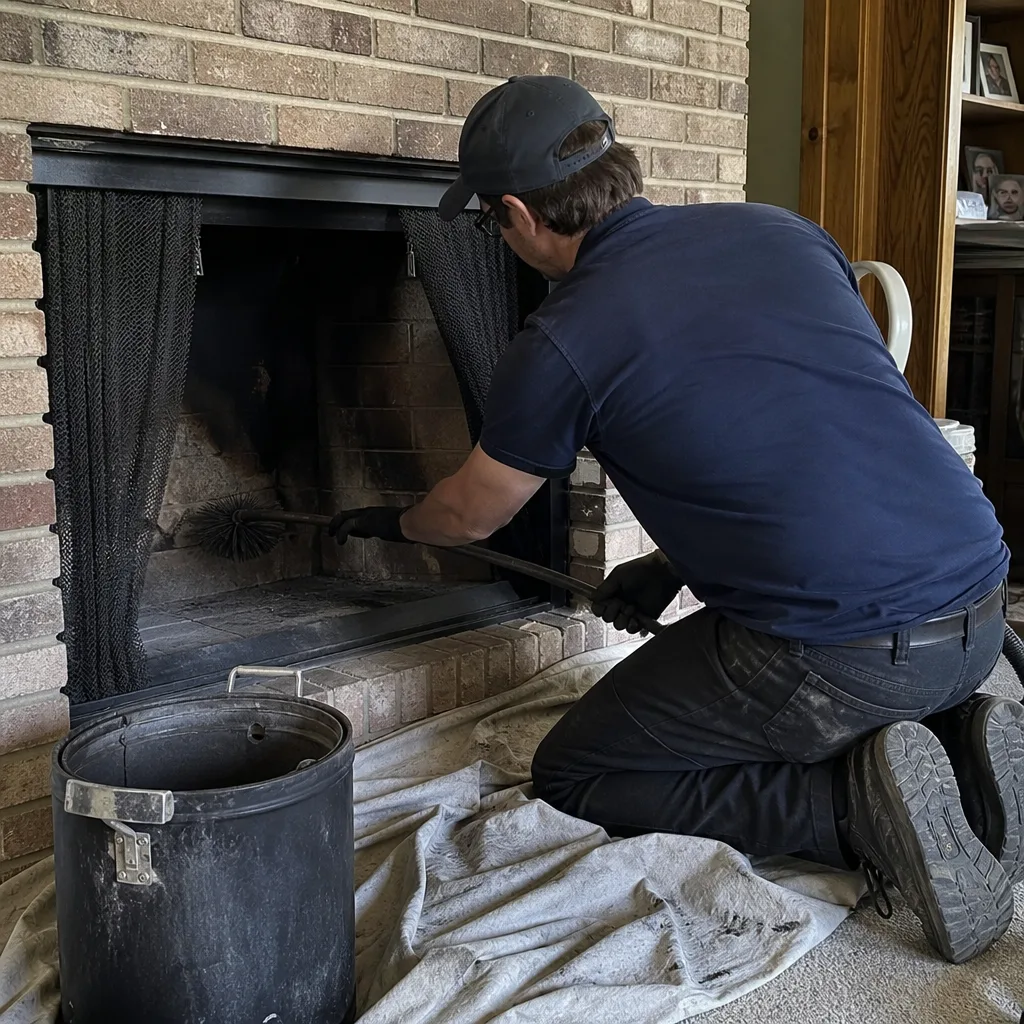
Illinois does not mandate chimney inspection at property transfer, but Cook County and surrounding jurisdictions increasingly require disclosure of “known defects in heating systems” on residential sale forms. A documented maintenance history protects you in three scenarios: insurance claims after chimney-related incidents, resale disclosure requirements, and warranty claims on liner or repair work.
What to Record
After each professional service, you should receive and file:
- Written scope of work – What was done, what was found, what was recommended
- Written price – Itemized charges, not a single lump sum (Haven Standard Clause 1)
- Photo or video documentation – Timestamped images of liner condition, crown, and any defects found
- Creosote classification – Stage I, II, or III, with thickness measurements
- Written warranty – What is guaranteed and for how long
- Technician identification – Name and license information
At Level Two Chimney Hoffman Estates home, every job since 2009 has included items 1-5 as standard under Clause 4 of the Haven Standard. We provide digital archives accessible to homeowners for the life of the structure, not just the duration of ownership.
Where to Keep It
Store physical copies with your home’s permanent records (deed, insurance policies, major repair receipts). Maintain digital backup in cloud storage. For additional maintenance tips, see more guides & resources. Illinois statute of limitations for property defect claims is five years from discovery; keep records at least that long past any service date.
For resale, a complete chimney maintenance log signals to buyers that the system was maintained proactively rather than reactively. In Hoffman Estates’ competitive market, this documentation can prevent last-minute repair negotiations that delay closing.
Red-Flag Conditions: When Routine Becomes Urgent
These conditions override the normal maintenance schedule. If you observe any, do not operate the fireplace until evaluated by a professional.
Visible Spalling with Active Water Entry
Brick faces popping off with visible water staining on interior walls near the chimney chase. This indicates failed crown or flashing with ongoing water intrusion that accelerates exponentially in freeze-thaw cycles. In Hoffman Estates’ climate, a single winter of unchecked water entry can progress from minor spalling to structural compromise requiring partial rebuild.
Damper Handle with No Plate Movement
The handle or chain moves but the damper plate does not open. This usually indicates the plate has corroded through and detached, or debris has jammed it completely closed. Operating a fire with a stuck-closed damper forces smoke into the living space; stuck-open wastes energy but is less immediately hazardous.
Odor of Creosote or Smoke in Living Space When Fireplace Is Not in Use
A sharp, tar-like odor, especially on humid summer days or when central air is running, indicates negative pressure drawing air down the flue past significant creosote deposits. This signals either a drafting imbalance or substantial buildup that requires immediate cleaning before next use.
Visible Flames or Glowing in Walls or Ceiling Near Chimney
Chimney fires often announce themselves as unusual rumbling sounds or visible glow. If you observe this, evacuate and call emergency services. After the fire department clears the scene, the chimney requires Level 2 inspection before any future use. The thermal shock of a chimney fire cracks liners and damages mortar even when exterior damage isn’t immediately visible.
Sudden Draft Reversal or Smoke Backup
A fireplace that previously drafted well now smokes into the room. Causes include flue blockage, damaged liner creating turbulence, or structural shift in the chimney. Do not assume it’s “just the wind.”
What to Expect During a Level 2 Inspection
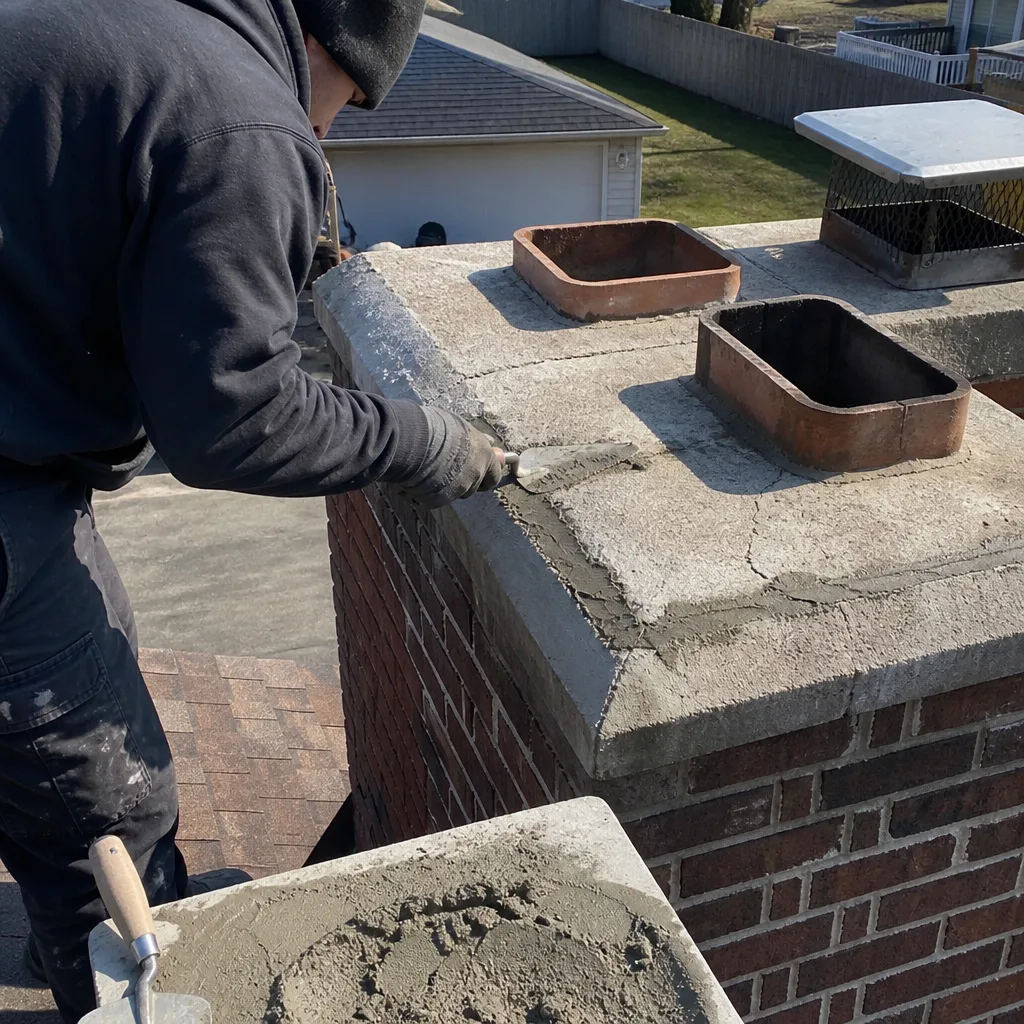
Understanding the professional process helps you evaluate what you’re paying for and ensures you receive documented value. At Level Two Chimney Co., the process follows the Haven Standard precisely.
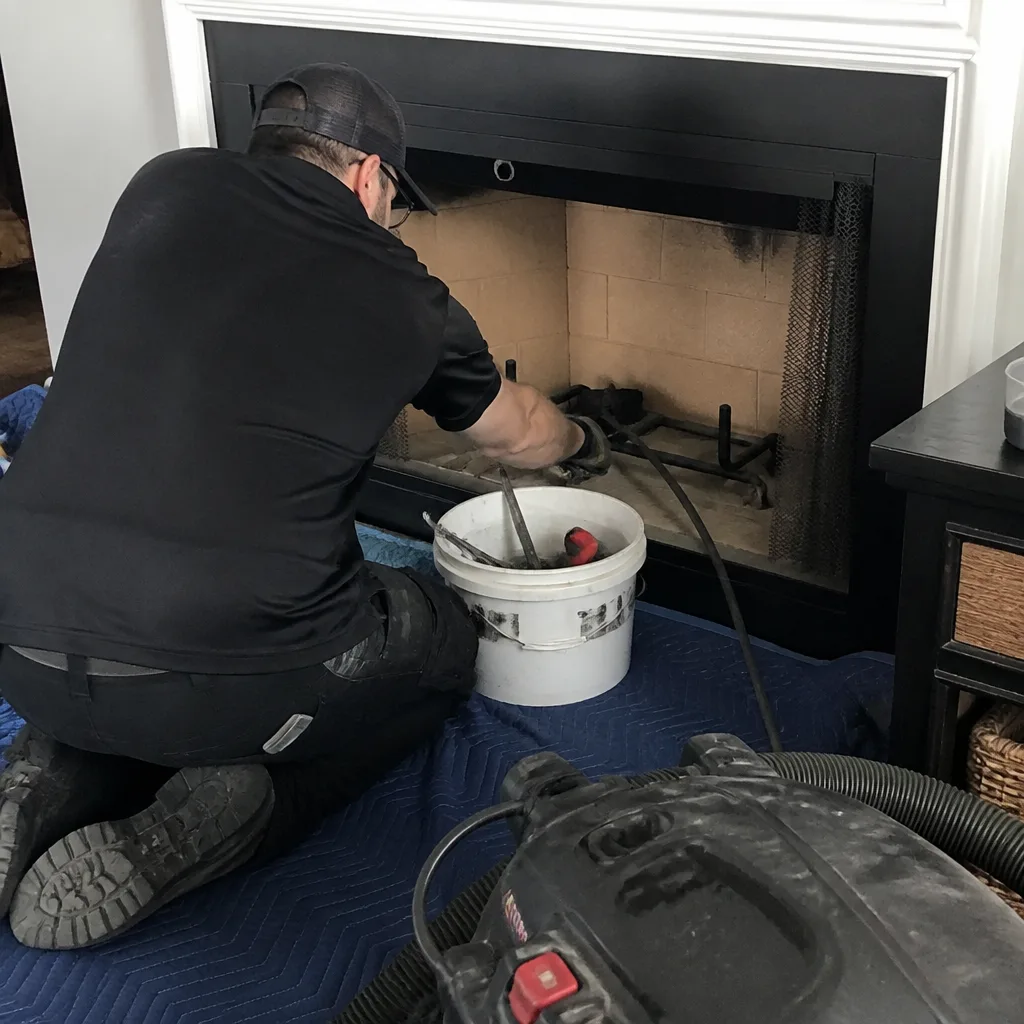
Arrival and preparation. You’ll receive a text when your technician is en route. Our technicians are background-checked, uniformed, and carry license information displayed on every page of documentation. We protect floors and furniture with drop cloths before equipment enters.
Visual and physical examination. The technician examines accessible portions of the chimney exterior, interior, and connections to appliances. This includes the firebox, damper, smoke chamber, and flue accessible from the firebox opening.
Camera-scan documentation. A high-resolution camera on a flexible rod is inserted the full length of the flue. The technician narrates findings in real time; you may observe the feed. We capture still frames of every transition point, joint, and anomaly. This practice, continuous since 2009, became Clause 4 of the Haven Standard.
Written findings and pricing. Before any work beyond the inspection begins, you receive a written scope, written price, and written warranty. This is Haven Standard Clause 1: “Have it in writing.” No exceptions. If we recommend repairs, the photos support every claim.
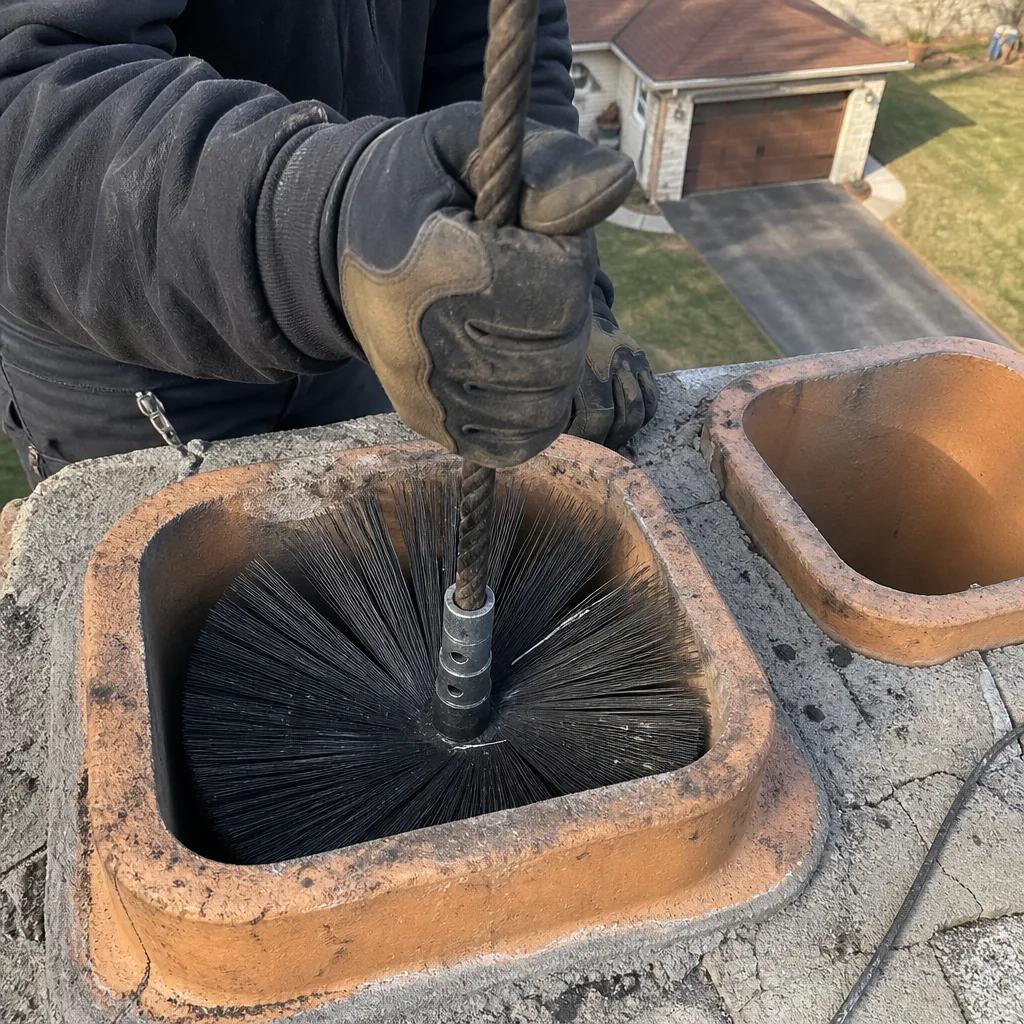
Cleaning, if performed. Standard sweep includes mechanical brushing of the flue, smoke chamber, and firebox, with debris contained by vacuum. Class III creosote requires additional treatment; this is quoted separately with photo evidence.
Completion documentation. You receive a completed inspection form, photo archive, and warranty documentation. The 365-Day Done Right Promise covers all work: if it’s not done right, we make it right.
For Chimney Repair in Hoffman Estates or Fireplace Services in Hoffman Estates, the same documentation standards apply.
Common Mistakes to Avoid
- Assuming a clean firebox means a clean flue. The firebox is the easiest part to clean yourself and the least fire-critical. Creosote accumulates in the cooler upper flue and smoke chamber, invisible without camera access. We’ve inspected Hoffman Estates chimneys with spotless fireboxes and hazardous Stage III glaze above the damper.
- Using “chimney cleaning logs” as a substitute for mechanical sweeping. These products may loosen light soot but do not remove Stage II or III creosote. They can also deposit chemical residues that complicate professional cleaning. They’re not recognized by NFPA 211 as an alternative to mechanical sweep methods.
- Inspecting only from the roof, not the firebox. The firebox and smoke chamber reveal conditions the crown and cap don’t: damper function, firebrick integrity, and smoke chamber configuration. A roof-only inspection misses half the system.
- Ignoring the chase on factory-built chimneys. In Hoffman Estates’ newer construction, metal chase covers rust from the underside first, invisible from the ground until holes appear. Annual inspection of the chase interior, not just the cap, catches this early.
- Deferring repairs because “it’s still drafting fine.” A chimney can draft adequately with significant liner damage if the damage hasn’t yet created turbulence. The first symptom of advanced liner failure is often a chimney fire or carbon monoxide intrusion, not draft problems.
- Failing to document. Without photos and written scope, you have no evidence of pre-existing condition for insurance claims or resale. Every professional sweep should provide this; if yours doesn’t, you’re receiving an incomplete service.
- Scheduling based on calendar alone rather than use patterns. A Hoffman Estates home with occasional weekend fires needs less frequent cleaning than one with daily wood heat, but both need annual inspection. Use determines cleaning frequency; time determines inspection frequency.
When to Call a Professional
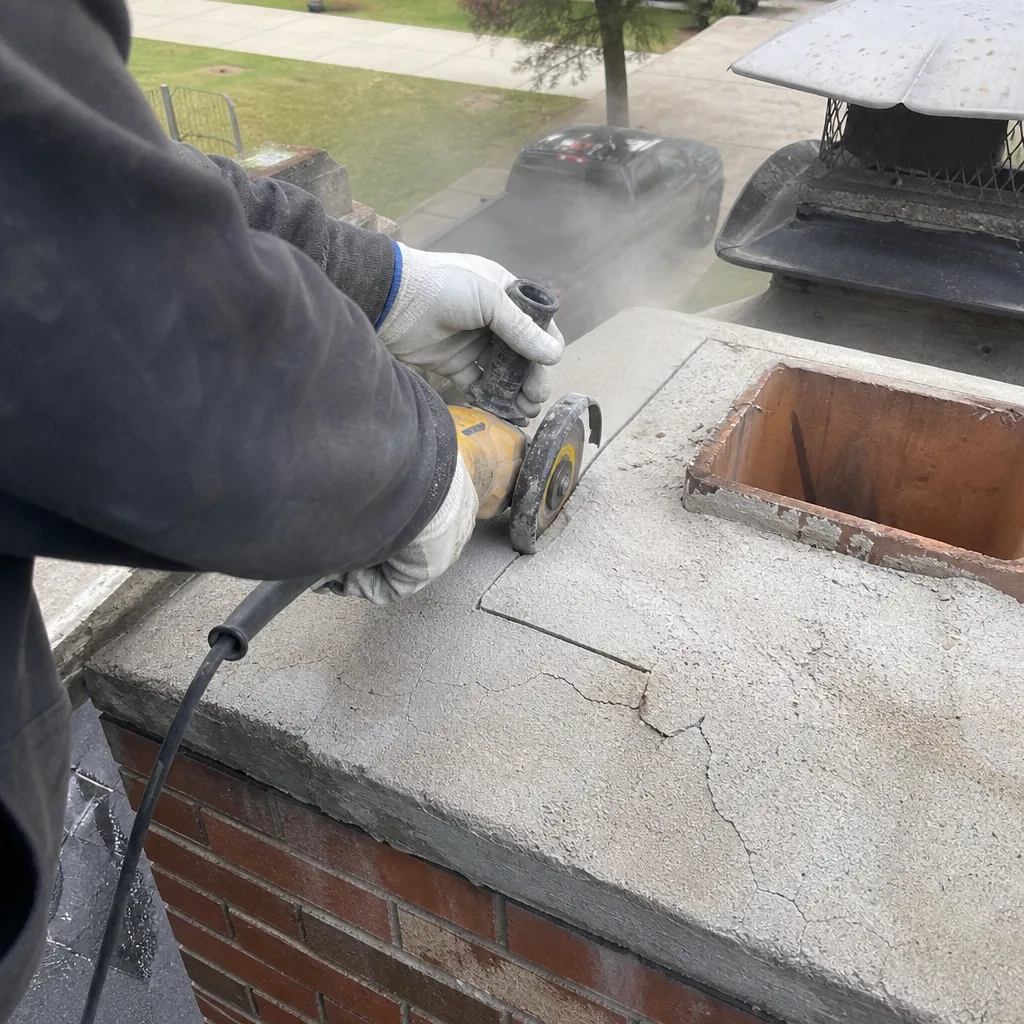
Call a certified sweep when any sweep-only item from this checklist is due, when any red-flag condition appears, or when you’re purchasing a home and need documented condition for negotiation. In Hoffman Estates, where winter temperatures regularly drop below 10°F and heating systems work continuously, chimney integrity directly affects both safety and energy efficiency.
Level Two Chimney Hoffman Estates offers free estimates throughout Hoffman Estates and surrounding communities. Every estimate includes the written price, written scope, and written warranty before any work begins. Call (331) 200-4445 to schedule, or request a free second opinion on any competitor’s written estimate.
Frequently Asked Questions
A standard Level 2 chimney inspection and sweep in Hoffman Estates typically ranges from $289 to $459, depending on flue configuration, accessibility, and creosote stage. Factory-built units with straight metal flues fall at the lower end; masonry chimneys with multiple flues or significant Stage III buildup require additional treatment. We deliver a written price before any work starts, with no charge for the estimate itself. Call (331) 200-4445 for exact pricing based on your specific chimney.
NFPA 211 recommends annual inspection for all chimneys, with cleaning frequency determined by use and creosote accumulation. In Hoffman Estates’ burn season (October through April), a fireplace used 2-3 times weekly typically needs annual sweeping; occasional use may extend to every 2-3 years if inspection confirms minimal buildup. We never recommend cleaning intervals longer than three years regardless of use, as debris, animal intrusion, or structural changes can occur without regular fires.
You need a new liner when camera inspection reveals through-cracks, missing tiles, or significant deterioration that compromises the flue’s ability to contain combustion gases and protect surrounding structure. We show you the camera footage and explain the specific defect before recommending replacement. Some conditions, like hairline cracks without displacement, can be monitored annually. Nothing is recommended without photo evidence you can see for yourself, and we’ll clearly state when work can safely wait versus when it cannot.
Skipped maintenance leads to progressive creosote accumulation, increasing chimney fire risk; water intrusion that spalls brick and deteriorates mortar; and liner damage that can allow carbon monoxide into living spaces or ignite adjacent framing. In Hoffman Estates, we’ve documented chimneys that progressed from minor crown cracks to partial rebuilds in under five years due to deferred maintenance. The cost of prevention is consistently lower than the cost of remediation.
Homeowners can safely perform the owner-observable checks in this guide. Mechanical flue cleaning requires proper brushes, rods, and vacuum equipment sized to your flue diameter, plus training in creosote classification. More critically, without camera inspection, you cannot verify that cleaning was complete or identify hidden liner damage. For safety-critical systems, professional evaluation provides documentation and expertise that DIY cannot replicate.
A Level 1 inspection is a visual examination of readily accessible portions of the chimney exterior, interior, and connections, appropriate for chimneys under continued use with no changes. A Level 2 inspection adds camera-scan examination of the flue interior, accessible portions of attics and crawl spaces, and evaluation of clearances from combustibles. It’s required at property sale, after chimney fire or seismic event, or when any appliance is changed. Level Two Chimney Co. performs Level 2 as our standard service, not an upgrade, because flashlight-only inspection misses the conditions that matter most.
Hoffman Estates does not have a municipal chimney inspection ordinance, but Illinois residential disclosure forms require sellers to report known defects in heating systems and fireplaces. A documented Level 2 inspection protects both parties: sellers by establishing condition at transfer, buyers by revealing hidden defects before purchase. We provide documentation formatted for real estate transaction use, including photo archives and written condition assessments that satisfy lender and insurer requirements.
The Bottom Line
Effective chimney maintenance in Hoffman Estates requires knowing what you can check and what you can’t. The owner-observable items, crown, cap, mortar, damper, and firebox, should be on your monthly checklist during burn season. The sweep-only items, flue liner, creosote stage, smoke chamber, and hidden obstructions, require annual professional evaluation with camera documentation. Schedule the professional inspection in mid-September, before demand peaks and before you light the first fire. Keep complete records for insurance and resale. And when you need service, demand written price, written scope, written warranty, and photo documentation before anyone starts work.
Level Two Chimney Co. has applied these standards to more than 38,000 chimney inspections and cleanings since 2009. Every job includes the Haven Standard’s core commitments: written price before work starts, background-checked uniformed technicians, live phone support, and a documented photo record on every visit. The 365-Day Done Right Promise backs it all.
Call (331) 200-4445 for a free estimate in Hoffman Estates. Estimates include written pricing with no obligation, and free second opinions are always available on any competitor’s written quote.
Written by Corrine Halstead, Owner at Level Two Chimney Hoffman Estates, serving Hoffman Estates since 2009.